Dispersed camping near Arlington, Washington provides access to numerous secluded sites along forest service roads and waterways. Most primitive camping areas require a Northwest Forest Pass, which costs $30 annually or $5 for a day pass. Sites along Baker Lake Road and Mountain Loop Highway typically open from late May through October, depending on snow conditions and road maintenance schedules.
What to do
Hiking near camp: Several dispersed sites offer direct access to trails without needing to relocate. At Pine Lake Campground, visitors can expect frequent trail users. "Cute sites, but you will be interrupted 500 times a day with walkers who use the trail and want to go straight through your site," notes one camper.
Kayaking to isolated spots: Water access camping provides solitude unavailable at roadside locations. The Hope Island Marine State Park requires boat transportation. "This campground is on a tiny island in the Puget Sound. Rent kayaks (or bring your own) at Boston Harbor in Olympia. It's a short trip to the island, which is only accessible by boat," explains one visitor who found unexpected privacy.
Berry picking: Summer months bring abundant wild berries to the forests around Arlington. Areas east of Skykomish provide "Fantastic berry picking & great views (when there is no smoke)," according to campers familiar with the region.
What campers like
River access: Campsites near flowing water remain the most sought-after locations. At South Fork Sauk River, visitors find "spacious tent sites with fire rings and gorgeous river & Mountain View camp grounds" midway along the Mountain Loop Highway.
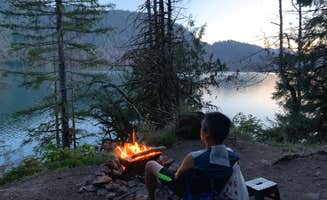
Lake views: Waterfront locations on Baker Lake provide scenic vistas without fees. One camper at Baker Lake Road Dispersed Campsite advises, "If you think all the spots are taken, keep driving. So many spots along Baker Lake Road."
Privacy between sites: Despite popularity, many areas maintain separation between camping spots. The Suiattle Riverside Camp features sites where natural barriers create seclusion. One visitor describes the location as "magical" with "a stream rushing over rocks. Ferns and big pines in the background."
What you should know
Road conditions vary significantly: Many access roads deteriorate after turning to gravel. On NF Dispersed Camping roads, expect challenges: "Probably some good camping out this way, but we didn't get more than a mile in our promaster before turning around. Camped on a wider part of the road."
Summer crowds: Peak season brings competition for prime sites. At Lower Sandy Dispersed Camp, one camper reported, "There are only a couple spots, you have to go down a long gravel road with lots of huge potholes and most of the spots are away from the water."
Wildlife encounters: Prepare for animal visitors at campsites. At Hope Island, "there were raccoons on the island with us but other than that we had the place to ourselves," requiring proper food storage.
Tips for camping with families
Look for established sites: Locations with existing fire rings provide safer environments for children. Along Mountain Loop Highway, "Meandering sites along the river with good logs for benches and fire rings made from forest rocks. Heavily forested and beautiful."
Check water access safety: Not all waterfront sites have gentle shorelines. Some Baker Lake dispersed sites feature steep drop-offs while others offer gradual entry points suitable for younger swimmers.
Consider noise factors: Sites near roads may experience disturbances. As one camper at Mountain Loop Hway Dispersed Camp noted, "The directions had me believing that the dispersed camping was just various pull offs on the highway loop and that's where I stayed. It was loud and it felt like the traffic was coming through my tent at times."
Tips from RVers
Size limitations are real: Most dispersed sites accommodate smaller vehicles only. At Lower Sandy Dispersed Camp, visitors observe there are "not many sites with large enough spots to park trailers or vans. Mostly tent sites that are walk in."
Dust management: Unpaved roads create significant dust issues. Near the South Sauk, campers note that "The Mountain Loop Highway is gravel and dirt through here, and many people travel too fast on it and kick up a lot of dust. This gets everywhere, so be careful of allergies."
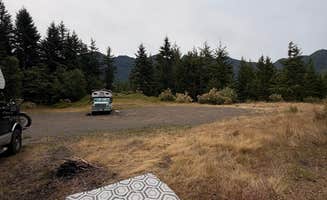
Look for pull-offs with level ground: Many sites require creativity for parking. At Baker Lake Road dispersed sites, "You will need a tent if you want to sleep by the water if not you'll have to sleep in a pull off."










 Scout
Scout


