Dispersed camping near Bassett, Virginia provides backcountry options for self-sufficient campers in the Blue Ridge Mountain region. The area experiences distinct seasonal changes with summer temperatures averaging 80-85°F and winter lows frequently dropping below freezing. These primitive camping areas generally lack developed facilities and require hikers to pack in all necessary supplies.
What to do
Bouldering opportunities: Near Johns Spring Shelter, experienced climbers can access routes at higher elevations. "Some of the routes are a little under maintained and mossy, but there are some fun ones. Lugging a crash pad all the way to the top isn't the most fun, but worth it if you want to get some cool bouldering in," notes camper Sam M.
Mountain wildlife observation: The forests around primitive campsites harbor diverse wildlife. At Shallow Ford Natural Area, campers report good viewing conditions. One visitor mentioned, "I hear the river in the background and lots of birds and squirrels."
Long-distance trail connections: The Mountains to Sea Trail runs through Shallow Ford, providing extended hiking options. A camper confirmed, "This campsite is on the Mountains to Sea Trail for those that are doing that."
What campers like
Natural shade coverage: Johns Spring Shelter and surrounding areas offer tree canopy protection. Shallow Ford Natural Area campsites feature "lots of shade and it is very peaceful," according to a recent visitor.
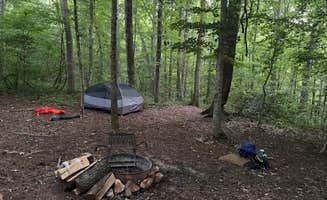
Established fire rings: Several primitive sites include basic fire rings. A camper at Shallow Ford noted, "It is pretty flat for your tent and there are fire rings. Someone left me a bundle of wood."
Tent-friendly terrain: The natural areas provide relatively level ground for setting up camp. A Johns Spring Shelter visitor described the area as having "sites that aren't bad though, pretty flat."
What you should know
Limited water access: Plan water supplies carefully for backcountry camping. At Johns Spring Shelter, "The closest water source is about 3 miles North," according to visitor reports.
Basic shelter conditions: Appalachian Trail shelters provide minimal protection. One camper described Johns Spring as "pretty basic, except for the lack of a good water source."
Varying site availability: During peak seasons, established sites may fill quickly. A visitor noted Johns Spring "is a decent spot to stay the night especially if it's not crowded! There's a few other shelters and stealth sites in the area that are also great options."
Tips for camping with families
Consider shelter alternatives: For families with children, tent camping may be preferable to shared shelters. One camper mentioned wooden shelters at Shallow Ford Natural Area "aren't my favorite to sleep in. Seemed nice as far as they go though."
Plan shorter segments: When backpacking with children to dispersed sites near Bassett, allow extra time between destinations. The distance between water sources and shelters can exceed 3 miles in some sections.
Prepare for primitive conditions: Most dispersed camping areas lack developed facilities. A visitor described Johns Spring Shelter as "Cute but very basic," highlighting the need for family preparation.
Tips from RVers
Access limitations: Most primitive camping areas near Bassett require hiking to reach sites. The access types for Johns Spring Shelter are listed as "hike-in" and "walk-in" only, with no vehicle access to the shelter.
Alternative parking options: RVers must locate suitable trailhead parking for overnight stays. No dedicated RV sites exist at the primitive camping areas around Bassett.
Pack-in requirements: With no hookups or services available, RVers transitioning to tent camping need to carry all supplies. These dispersed sites have "NO electric-hookups" and "NO water-hookups" according to site listings.




 Ranger


