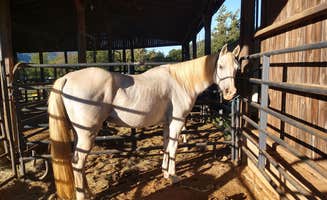
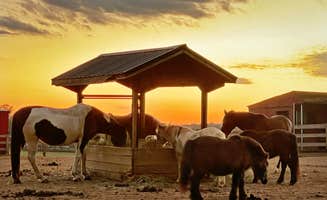
East Fork Campground and Horse Stables offers dedicated equestrian camping facilities with trail access across the Monongahela National Forest. The campground provides separate stabling for horses away from the camping area with individual stalls that include water access and tack storage space. Located at 3,000-4,800 feet elevation throughout the region, horse trails in this part of West Virginia and Virginia range from relatively flat converted rail trails to challenging mountain terrain suitable for experienced riders. Most equestrian-friendly campgrounds in the area operate seasonally from April through early November due to harsh winter conditions.
What to do
Horseback riding on mountain trails: At Spruce Knob Lake Campground, riders can access extensive trail networks. "It's very remote, but you're at the top of a mountain so it's gorgeous," notes Brittany M. The campground connects to trails with "excellent birding especially in spring or fall during migration," according to Tim M.
Fishing at stocked ponds and lakes: Trout Pond Recreation Area provides opportunities for anglers. "The lake water was crystal clear and is surrounded by beautiful views of the mountains," reports Laure D. Fred F. adds, "Swimming is excellent with sand beach. Big catfish in clear water. Water was so clean that it was throbbing with freshwater jellyfish."
Hiking mountain terrain: Trails throughout the region offer diverse difficulty levels. "There's a really cool rock formation where the creek goes under the Whitmer Road Bridge," Jennifer R. mentions about Gandy Creek Dispersed Camping. For more established trails, Christopher B. recommends Laurel Fork Campground: "This place feel and literally is in the middle of nowhere. It takes forever on dirt forest service roads to finally stumble upon this place, making its beauty that much more enchanting."
What campers like
Secluded campsites with creek access: At Gandy Creek, "Each site is secluded and creek front. We stayed at the last site with the cliff over hang and it was magical," shares Sandra B. Tommy S. adds, "I noticed it as I was collecting firewood on the opposite shore, and felt some water about 20 degrees cooler than the creek joining from the mountains."
Dark skies for stargazing: The minimal light pollution around Big Meadows Campground creates exceptional night sky viewing. "And finally, the fireflies are spectacular. At dusk, the ground shimmers, and then after they disperse, you will still see them flit by the tent throughout the night," says Veronica S. According to Jean C. at Spruce Knob Lake, "You're in the middle of nowhere, so you do have a truly dark sky."
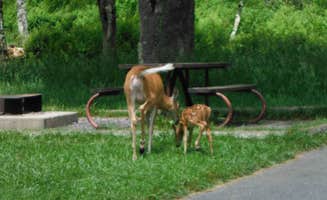
Wildlife encounters: Many campgrounds offer opportunities to observe native wildlife. "We saw many deer and bear while camping. Just being in Shenandoah is a soothing experience," Rachel M. notes about Big Meadows. At Laurel Fork Campground, Dana M. observed "Tons of wildflowers and butterflies!"
What you should know
Remote locations with limited services: Many equestrian campgrounds have minimal amenities. "It's very remote. Pit toilet, no sinks or sanitizer. Limited running water," Brittany M. warns about Spruce Knob Lake. "Do not expect cell service, we didn't have any for about 45 min driving there."
Weather and flooding concerns: River campsites can experience rapid changes. Kelly G. at Yokums Vacationland recounts, "The skies opened up, a large limb fell on my tent and the water level began rising. I was so scared I went and slept in my car somewhere else. Later I learned this area is prone to flooding."
Seasonal availability: Most facilities close during winter months. "The campground operates seasonally with the entrance gate locked from Dec 21 - May 1," notes John B. about Trout Pond Recreation Area. Tim M. adds that Spruce Knob Lake is "stocked with trout spring and fall," indicating these are prime camping seasons.
Tips for camping with families
Look for campgrounds with kid-friendly activities: Shenandoah Crossing offers extensive recreation options. "Salt water pool, horse rides, go karts, mini golf. Definitely more than a campground," reports RL. Nicole P. adds, "Kayak, putt putt, tennis, swim in one of the pools, hot tub, work out in the gym, walk on trails, ride horses, take a carriage ride."
Choose campsites with water features: Children enjoy playing in creeks and lakes. "Kids were able to fish for hours at the two fishing ponds, which both were stocked with bass and bluegill," Jason G. mentions about Fort Valley Ranch. At Trout Pond, Fred F. notes the "Nice hiking, kayaking & swimming" opportunities.
Pack for insect protection: Depending on the season, insects can be problematic. Anna R. shares about Big Meadows: "We were there during a heat wave so there were bugs but being from Georgia the heat was bearable." Surprisingly, Dana M. found that Laurel Fork Campground had "No Bugs to speak of!" despite being "settled deep in the woods."
Tips from RVers
Reserve early for equestrian sites with hookups: Horse-friendly campsites with RV accommodations fill quickly. At East Fork Campground and Horse Stables, Cindy B. reports, "Most of the sites were full hook-ups and the facilities were very clean and well maintained." Harold C. adds, "Called and got a reservation Aug 1-12th had a slight problem. We called to say we couldn't make it until the 2nd no problem and no charge."
Consider road access before booking: Mountain roads can be challenging for large rigs. "The drive to the campground (Thorny Bottom Rd. CR 16) was a bit windy but doable. Better to go to Wardensville, WV and down 16 rather than try to cross the mountain," advises Laure D. about Trout Pond Recreation Area.
Check site leveling before setup: Mountain campgrounds often have uneven terrain. Brenda L. notes about Shenandoah Crossing, "Our site was not exactly level but I think it was because we were in the first spot on a row and it had a slant. The others looked pretty level."






 Legend


