Tent camping in Hopkins, South Carolina centers on Congaree National Park, home to one of the largest intact expanses of old-growth bottomland hardwood forest in the southeastern United States. The park contains over 26,000 acres of floodplain forest with trees reaching heights of 130 feet, creating a distinctive canopy habitat for camping. Spring camping coincides with seasonal flooding, while summer temperatures regularly exceed 90°F with high humidity levels.
What to do
Observe fireflies in late May: Synchronous fireflies at Congaree National Park create a natural light display that draws many campers. "We camped here to see the synchronous fireflies, and loved our stay! The hiking was excellent, and the fireflies were one of the most magical things I've ever seen," notes a visitor who stayed at the group site.
Explore the boardwalk trail system: The elevated wooden walkways protect the delicate ecosystem while providing access to distinctive cypress knees and champion trees. "Pristine, but organized trails near the Consgree river and Swamp. Lots of wildlife and ancient trees on the trails. A rare treat to go back in time like this," reports one camper about their experience.
Listen to wildlife after dark: The sounds of frogs and other nocturnal creatures create a distinctive soundscape. "The campground is next to a pond that gets rather loud at night. I never knew frogs/toads could be so loud. On the path after crossing the road, we saw the synchronous fireflies," shares Kelly, who counted 250 steps from the parking lot to their site.
What campers like
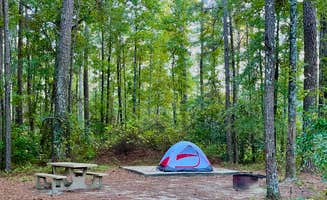
Short walk-in access: Longleaf Campground offers relatively easy access for a walk-in campground. "Ten site campground, all walk in. Sites 1 and 2 fairly short distance to walk. Campsites are spacious and clean. Easy distance to access visitor center and main trails," explains one camper who appreciated the convenient layout.
Peaceful atmosphere: The remote setting provides a quiet escape from busier campgrounds. "After losing several nights of sleep at our previous campground, this one was a huge relief. Sites were spread out, but also the vibe was less 'party all night' and more 'sleep and then explore the park during the day.' Exactly my kind of vibe," reports a satisfied visitor.
Nearby conveniences: Despite the primitive setting, basic supplies remain accessible. "There is a convenience store with sandwiches, ice, beer, and groceries in Gadsden 8 min away which was convenient. Just a couple minutes from Congaree national park," notes Allissa, highlighting practical access to necessities.
What you should know
Bring a wagon: The walk-in sites require carrying all gear from the parking area. "I stayed at the site closest to the parking lot. It's a quick walk. If I brought everything to the site, it would be nice to have a second person or a wagon," suggests a camper who stayed at Bluff Hike In Campground.
Prepare for insects: Bug protection is essential during warmer months. "Definitely bring a wagon for packing your stuff in and prepare to be eaten alive by deer flies everywhere you go," warns one camper who visited in June, noting that insect repellent is not optional.
Limited facilities: The primitive nature of the campgrounds means planning for minimal amenities. "The vault toilet was disgusting, covered in splattered poop and very smelly. I sometimes drove to the visitor center to use the flush toilet and sink there," shares one visitor who recommends utilizing the visitor center facilities when possible.
Tips for camping with families
Choose sites 1-3 for easier access: Families with small children benefit from shorter distances to carry gear. "About 300 feet from the parking lot so easy to walk into and make trips back to the car or motorcycle in my case," explains one camper at Rocky Branch Hunt Camp, highlighting the convenience of closer sites.
Pack for changing weather: Seasonal conditions can affect tent camping significantly. "The first night got a lot of rain and storms and several of the campers from sites farther back left saying they were flooded out. Our site did have some water during the storm but it was gone by morning," reports a camper who noted that the tent pad remained dry despite flooding elsewhere.
Plan activities around peak heat: Summer temperatures make midday outings challenging for families. "The heat in June is also pretty bad, so having to go back and forth out to your vehicle to bring your stuff in and out is very difficult even though the path is flat and very short," cautions a summer visitor who recommends early morning or evening activity.
Tips from RVers
Consider level sites over primitive options: For the best tent camping near Hopkins, South Carolina with an RV approach, look beyond the national park. "These sites are level and waiting for your RV. Water, sewer, power and dump station on site," notes one visitor about alternatives to the more primitive national park options.
Be aware of flooding risk: Lowland terrain means water management concerns for all campers. "It's lowlands so it floods easily in heavy rains...learned this the hard way!" warns a camper who experienced firsthand how quickly sites can become waterlogged after storms.
Cell service varies: Connectivity remains available in certain areas despite the remote setting. "We had Verizon service. Enough to use Google image search to look up plants, animals, and mushrooms we had found," reports one visitor who maintained sufficient signal for basic internet usage while camping.




 Traveler


