Primitive camping near Raleigh, North Carolina exists primarily on public lands with seasonal access restrictions. The Piedmont region surrounding Raleigh features rolling woodland terrain between 250-350 feet in elevation with mixed pine and hardwood forests dominating the landscape. Winter overnight temperatures regularly drop below freezing, requiring appropriate cold-weather gear from November through March.
What to do
Fishing access points: Multiple dispersed camping areas provide proximity to fishing opportunities. At Butner Lake WMA, campers note the convenient water access: "There is a lake 2 mins away one way and another 7 mins away the other way," making it ideal for anglers seeking multiple fishing locations.
Wildlife observation: The natural areas surrounding primitive campsites offer excellent wildlife viewing opportunities. One camper at Butner Lake WMA reported: "I heard many coyotes elks and a an owl but nothing never stumbled to our campsite close enough to get a look at it other than one young fox." Bring binoculars and practice dawn/dusk observation for best results.
Hunter accommodation: Many free camping areas near Raleigh primarily serve hunters during designated seasons. As one visitor to Butner Lake WMA observed: "Most campers are here to hunt so are gone most of the day. It was not crowded when I was there during the week."
What campers like
Cost-free camping: The free dispersed camping options provide budget-conscious alternatives to developed campgrounds. At Anderson Creek County Park, hikers can access no-cost camping areas without facilities, allowing for true primitive camping experiences within 45 minutes of Raleigh.
Quick urban access: The strategic locations of these sites offer convenient proximity to supplies and services. According to one Butner Lake WMA camper: "Very primitive, but close to town if you need anything." Another noted it's "very easy to get too, right off interstate, very primitive but you have a decent signal if you need to park and get work done."
Low-commitment options: These sites serve well for short stays or travel stopovers. One camper specifically mentioned Butner Lake WMA as a "terrific spot to pull up for a night" while another called it a "Great spot to sleep if you are passing through."
What you should know
Permit requirements: Some areas require specific permits beyond standard camping regulations. A Butner Lake WMA camper warned: "All Campers MUST have a fishers/hunters license. Rangers wrote us a warning ticket for not having our own, but we are headed to Walmart to get one for about $30."
Site limitations: Understand the physical constraints before arriving. A visitor to Butner Lake WMA explained: "You have a fire ring and a line to hang things from thats about it here, really nice place to camp if youre comfortable not having a toilet."
Variable camping conditions: Site quality and atmosphere can change based on other visitors. One Butner Lake WMA camper reported less than ideal conditions: "When I pulled up, there was a large, unattended RV with 4 aggressive dogs in a cage outside. A couple other camps gave a sketchy vibe, and they were all close together. We bailed."
Tips for camping with families
Privacy considerations: Families seeking seclusion should understand the communal nature of these sites. At Hibernia State Rec Area, boat-in camping provides more isolation than the drive-up options at other locations, offering better separation for families with young children.
Emergency planning: Limited cell service affects communication abilities in emergencies. While one camper noted having "Boost mobile wi-fi worked perfectly fine" at Butner Lake WMA, coverage varies by carrier and exact location, requiring alternative communication plans.
Site security: With minimal supervision, families should take precautions with valuables. Some campers stay for extended periods, with one noting they "camped out a little longer than the actually extension period for individuals, but never had a problem."
Tips from RVers
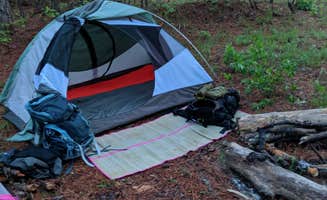
Size restrictions: Larger vehicles face significant limitations at most dispersed sites. According to one RVer at Butner Lake WMA: "This is a small road and if you had a camper of any size it would take you a while to turn around. Very few places. This is a place to pitch a tent or to Car Camp."
Trailer accessibility: Some smaller trailers can navigate to certain sites despite limitations. One camper observed: "Saw one other person here come in with a 30 foot trailer, didnt think he would fit but found a spot just fine."
Primitive conditions: RVers must prepare for self-contained camping without hookups. Sites typically provide minimal amenities, with one camper describing Butner Lake WMA as "Works perfectly, especially in a pinch" for basic overnight needs, but lacking amenities for longer stays.




 Scout
Scout


