Equestrian camping near Webster, Massachusetts offers dedicated facilities for riders and their horses with options spanning two states. The area's mixed deciduous forests and rolling terrain provide suitable riding conditions from April through November when temperatures typically range from 45-80°F. Both Connecticut and Rhode Island state lands maintain designated horse-friendly camping areas with varying levels of amenities and trail access.
What to do
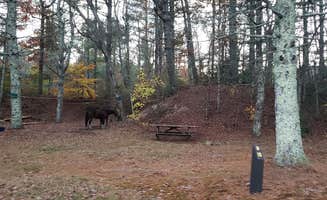
Trail riding directly from camp: At Frog Hollow Horse Camp at Pachaug State Forest, riders can access three distinct horseback riding loops without trailering horses. According to one camper, "Three horseback riding loops leave from the campground. There's also fishing and hiking available in the forest."
Outdoor recreation beyond riding: The region offers multiple activities for non-riding days. At Ponkapoag Camp, campers enjoy water-based activities with one visitor noting, "Water was nice and fish were biting. Can't wait to come back." The camp also features "Lots of hiking trails" making it suitable for multi-day stays.
Family-oriented activities: Normandy Farms Campground provides extensive recreation options with one camper reporting, "Four pools, fishing pond, lodge, trivia night, soccer, baseball, softball and frisbee golf and so much more." These amenities complement horseback riding excursions for families combining multiple outdoor interests.
What campers like
Horse-friendly facilities: The LeGrand Reynolds Horsemen's Camping Area offers more developed sites than other equestrian campgrounds in the region with electric service, water connections, and dedicated space for trailers. Sites accommodate both personal camping equipment and horse transportation needs.
Peaceful natural settings: Despite proximity to urban areas, many campgrounds maintain a natural atmosphere. One Ponkapoag Camp visitor appreciated that "We have always loved it here. It is rustic camping, no water or electricity and the bathroom is an outhouse and no showers. The people are friendly and we have always had a good time."
Accessibility from urban centers: Wolf Den Campground at Mashamoquet Brook State Park provides equestrian-accessible trails within reasonable driving distance from Webster. A camper noted, "Close to a small walking path and a larger intermediate hiking trail. Bathrooms were clean and staff were friendly."
What you should know
Site selection matters: When horse camping, choosing appropriate campsites impacts overall experience. At Wolf Den Campground, "The parking pads are paved and a few have overhanging branches, but the trees provide separation and some shade on largely open sites that tend to open up toward the back with open areas for pitching tents."
Reservation requirements vary: While Frog Hollow operates on first-come, first-served basis, other equestrian campgrounds require advance planning. For The Preserve Club and Residences, membership is required, with one visitor noting it's "a members/owners only community which is New England's most amenity rich properties."
Seasonal considerations: Fall remains popular for equestrian camping with moderate temperatures and reduced insect activity. According to experienced campers, weekends from September through mid-October see highest occupancy rates at horse camps throughout the region.
Tips for camping with families
Choose campgrounds with amenities: Jelena's Campground offers basic facilities while Normandy Farms provides extensive recreation options. One visitor explained, "They had tons of festive activities. They have an indoor and an outdoor pool. The restrooms are clean. I highly recommend staying here."
Consider noise levels: Some equestrian campgrounds offer more quiet environments than others. A family-focused reviewer at Normandy Farms cautioned, "It is loud, crowded, with golf carts and kids running around. It is a resort campground with pools, frisbee court and etc... This is not a quiet, restful place."
Plan for weather fluctuations: New England weather can change rapidly, particularly in spring and fall. At Ponkapoag Camp, one camper reported, "We were there Memorial Day weekend, and needed the stove when it dipped to 40 degrees."
Tips from RVers
Limited hookup availability: Most dedicated equestrian campgrounds offer limited or no hookups. At LeGrand Reynolds Horsemen's Camping Area, the electric and water connections primarily serve camping rigs attached to horse trailers rather than standard recreational vehicles.
Site dimensions: Horse-friendly campgrounds typically provide wider, longer sites to accommodate trailers. A Normandy Farms camper confirmed, "Super long sites. Full hook ups" making it suitable for combination rigs requiring additional space.
Accessibility challenges: Many equestrian trails connect to primitive camping areas with limited RV access. When staying with horses in larger rigs, campers report better success at established campgrounds with dedicated trailer parking rather than remote trailheads or primitive horse camps.




 Legend


