The Chattahoochee National Forest area near Royston, Georgia offers extensive equestrian trail systems at elevations ranging from 1,200-2,500 feet. Winter temperatures typically stay above freezing during daytime hours, making this region suitable for year-round horse camping. The forest terrain features a mix of hardwoods and pines with moderate slopes suitable for most riding experience levels.
What to do
Riverside riding: Follow trail systems along the Chattooga River through Willis Knob Horse Camp where riders can access routes suitable for various experience levels. "Some of the best Horse Camping in the Mountains, Great Horse trails that follow the Chatooga River," notes reviewer Mark C. These trails are designed with erosion prevention in mind, making them accessible in various conditions.
Historical site exploration: Visit nearby Stump House Tunnel while camping at Whetstone Horse Camp. According to Maddi P., "If you ever have time I also recommend stopping by stump house tunnel which is near by its 2 adventures for the price of 1!" The tunnel provides historical context to the region's railroad development efforts from the 1850s.
Lake activities: Access Lake Lanier recreation when staying at regional campgrounds within driving distance. "A great place to camp with lots of hiking trails; there's even a canoe trail!" reports Kevan R. about Don Carter State Park. Many equestrians combine horse camping trips with water activities at nearby lakes.
What campers like
Well-constructed trails: Equestrians appreciate the thoughtful trail design at Willis Knob Horse Camp. Phyllis B. explains that "Trails are wonderful and well-constructed to avoid deep mud." This design feature allows for better footing even after rainfall, extending the useful riding season.
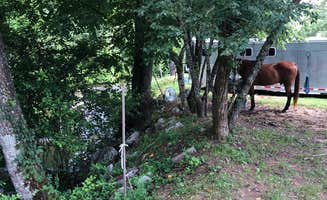
Creek-side camping: Several equestrian campgrounds offer water features within the camping area. At Randy's Horse Camp, Donna F. mentions "Wonderful place to Camp good people and beautiful views. And the creek runs thru the camp." These water features provide both scenic value and water access for horses.
Clean facilities: Campground maintenance receives consistent praise from equestrian campers. The Cherokee Campground maintains high cleanliness standards according to Colin M. who states: "Nice level lots. Very quiet. The owner is a great person. The bath house is a little dated but always spotless." This attention to facility maintenance enhances the overall camping experience.
What you should know
Highline requirements: At equestrian campgrounds near Royston, Georgia, most sites provide highline posts but require campers to bring their own equipment. According to Phyllis B. at Willis Knob Horse Camp, "Sturdy highline posts are provided but you need to bring your own ropes and other highland gear."
Trail navigation challenges: Trail maps may be difficult to obtain in printed format. Phyllis B. notes "My only complaint is the lack of really good, accurate trail maps to print out and carry with you of the horse trails on both the Georgia and South Carolina sides of the river." Consider downloading digital maps before arrival as cell service can be unreliable.
Weather considerations: Mountain trails can become challenging after heavy rainfall. At Watson Mill Bridge State Park, Nicole R. advises, "If there is rain in the forecast do not, for the love of God, do not camp in the pioneer sites. You will get flooded."
Tips for camping with families
Multi-activity planning: Families with both riders and non-riders should consider campgrounds with diverse recreation options. At Watson Mill Bridge State Park Campground, Lee D. describes, "There are seven miles of hiking trails, five miles of bike trails, canoe rentals, and we saw several people fishing," making it suitable for mixed-interest groups.
Educational opportunities: Incorporate learning experiences into your equestrian camping trip. George & Patty C. mention that "There are hiking trails, geocaches, a beach area, picnic shelters, cottages and a brand new equestrian trail system!" at Don Carter State Park, providing educational activities alongside riding.
Water safety: When camping near water features with children, note potential hazards. Rebecca L. cautions about Watson Mill Bridge State Park: "Wade in the river below the bridge but careful, the rocks are slick." This is particularly important for families with small children who may want to explore water features.
Tips from RVers
Site accessibility: Large horse trailers with living quarters require advance planning at most equestrian campgrounds. At South Cove County Park, Kelli P. observed, "We were impressed with the large number of pull through sites and the cleanliness of the campground." Consider these more accessible sites when traveling with larger rigs.
Seasonal timing: RVers should consider weather patterns when planning equestrian camping trips. At Don Carter State Park, George & Patty C. warn, "We'll be back but in the Fall when it is a bit cooler!" noting that summer heat combined with limited shade affects comfort in some camping areas.
Electrical capacity: Check amperage availability when bringing horse trailers with living quarters. Paul Z. reports about Watson Mill Bridge State Park: "Only 30A power here so we had to watch what we were running electrically. They did have 2 30A outlets but at this time we did not have the double 30 to 50 amp adapter."




 Traveler


