Dispersed camping near McArthur, California occurs primarily on federal lands in Modoc and Lassen counties, at elevations ranging from 4,000 to 5,000 feet. The high-desert terrain features volcanic formations, seasonal creeks, and sagebrush flats that provide natural windbreaks. Winter temperatures frequently drop below freezing, while summer daytime highs reach 90°F with cool evenings.
What to do
Explore lava tubes: The dispersed sites near Lava Beds National Monument Road provide convenient basecamp options for exploring the area's volcanic landscape. "There are several spots to choose from with some campfire rock rings already here," notes Hilary S., who camped at Lava Beds National Monument Road.
Fish local reservoirs: Many dispersed sites offer access to fishing opportunities. At East Eagle Lake, camper Gregg T. mentioned his interest in fishing: "Took a nice walk by the lake. Gonna revisit heading south. Maybe wet a worm?"
Stargaze without light pollution: The remote location of most McArthur dispersed camping areas provides excellent dark sky conditions. One visitor at a Lava Beds pullout reported it was "the coolest zoom background ever" during a morning video call, suggesting the scenic views extend from day to night.
What campers like
Convenient overnight stops: Travelers passing through northeastern California appreciate the accessibility of roadside dispersed camping. At Lesson Trail Marker Road Side Stop, John L. describes it as a "Road side area, gravel surface. Step entry off road. Creek side good for stop over."
Solitude and space: Most dispersed sites offer significant distance from other campers. Rich R. noted about Duncan Reservoir South Site that it has a "Small camping area but not many people," after traveling "Graded dirt road a few miles from highway."
Cell connectivity: Surprisingly reliable connectivity exists at some remote sites, making them suitable for digital nomads. Sarah P. was pleasantly surprised at a Lava Beds area pullout: "Tmobile service actually worked great for once, I was even able to take a video meeting here in the morning!"
What you should know
Fire regulations vary seasonally: While many sites have established fire rings, restrictions change based on conditions. Karen O. noted at Lava Beds National Monument Road: "Even though it is a National Park the rangers allowed us to collect dead and down wood for the fire. They do not sell firewood in the park."
Road conditions require planning: Many dispersed sites require travel on unimproved roads. One camper noted their experience finding Duncan Reservoir South Site: "Found this unmapped camping spot by following a USFS access road to an old boat launch area."
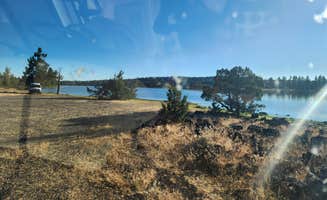
Seasonal water levels affect access: Water features change dramatically by season, affecting site usability. At Rocky Point Dispersed Camping, Tom P. describes it as a "Large barren area with a toilet near the lake," highlighting the variable landscape conditions.
Tips for camping with families
Bathroom availability: Only select dispersed sites offer toilet facilities. Tom P. mentions that Rocky Point has a "toilet near the lake," which makes it more suitable for families with young children compared to completely undeveloped sites.
Wildlife awareness: Insects are common in warmer months. Sarah P. warns that at dispersed sites near Lava Beds, "the flies and bees are plentiful but nothing I couldn't handle, and I don't like bugs lol."
Weather preparation: Temperature swings are significant in this high desert environment. Karen O. appreciated that "we stayed in a campground with heated bathrooms which was great because we pulled into camp during a storm."
Tips from RVers
Pullout identification: RVers should scout potential sites before committing. At (41.6653695, -121.3224946) near Lava Beds, Sarah P. advises: "There are many pulloffs down this road... I figured I'd go down the road and see if there were more secluded spots. There was!"
Leveling challenges: Most dispersed sites aren't perfectly flat. Tom P. noted about Rocky Point: "Not great for a tent but can make it work," which suggests RVs may also require leveling blocks.
Trailer accessibility: Some sites can accommodate larger rigs despite their remote location. Hilary S. reported: "Easy off the road. Was able to pull in our 26 foot travel trailer" at a site along Lava Beds National Monument Road.




 Ranger


