

R
Richard S. Scout
ScoutNF-9730
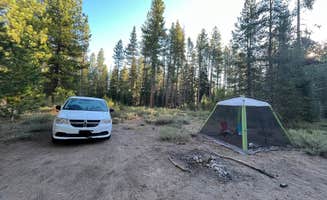
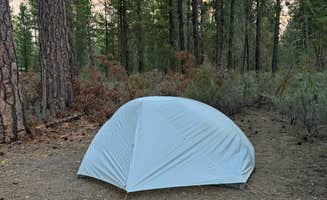
Nice wide open space. Took a nice pullout close to entry. very quiet for the night
2 campgrounds with availability next weekend
Camping near Crater Lake National Park ranges from developed campgrounds with amenities to free dispersed sites on surrounding public lands in Oregon. Mazama Village Campground serves as the primary camping option within the park boundaries, featuring tent sites, RV spots, and cabin options. Beyond the park, public lands offer free dispersed camping at locations like Mount Thielsen Wilderness and NF-70 Dispersed Camping. Diamond Lake Campground, located north of Crater Lake, provides additional options including glamping accommodations alongside traditional camping.
Most campgrounds in the region operate seasonally from late spring through early fall due to heavy snowfall at higher elevations. "The campground has multiple loops and is the bigger of the two campgrounds in the park. Mazama is the only RV campground at Crater Lake," noted one reviewer who visited in September. Primitive sites typically lack drinking water and require campers to pack in their own supplies. Lost Creek Campground has experienced periodic closures, with one visitor reporting in 2022 that it was "closed to the public and has been for a couple years. Only fire crews working in the park are allowed to stay here." Temperatures drop significantly at night even during summer months due to the 6,000+ foot elevation, and visitors should prepare for potentially cold conditions regardless of season.
Campgrounds near Crater Lake typically include amenities such as toilets, picnic tables, and fire pits, though availability varies by location. Several campers mentioned difficulties with overcrowding at Mazama Village during peak season. According to one visitor, "The sites are huge, at least the two that we got. I wish I could've chosen our sites, but you don't usually get to with concessionaire campgrounds." Finding privacy can be challenging, as another camper observed that "campgrounds were so close together we could see 6 campgrounds and their tents from our fire pit." For those seeking more solitude, dispersed camping options on forest service land offer more isolation but fewer amenities. Most sites require bear-resistant food storage, with Mazama Village providing bear boxes at each campsite.
"Crater Lake National Park itself is an amazing, unique place. The campsites were nothing special and a bit close together, but a great perk was the neat show in the amphitheater at night."
"The Mazama Village campground at Crater Lake National Park is located 7 miles south of Crater Lake's rim."
"Great spot near Crater Lake National Park. Head down the hill to more remote tent sites."
"Great free spot literally less than a mile outside crater lake national park. Fire pits, toilets, big parking lot that easily would accommodate large rigs."
"Bikes and Boat Rentals nearby as well as a small general store and restaurant. Short drive to Crater Lake National Park.
Note: I recommend getting a site near the water if you can."
"Lots of people and lots of campgrounds around the lake, but still didn’t feel super busy. Many of the sites at Diamond Lake are right along the lake with direct, ‘private’ lake access."
Campground full next weekend
Get a text when availablefrom $16 - $27 / night
"The camp grounds are small and you are very close to your fellow campers HOWEVER if you head out of the park after a day of playing and taking in the sights there are forest roads all over!"
"Twelve sites (three pull into spots and 9 where you park seperate and then walk around a fence to the tent site). 2 semi clean vault toilets, nothing to write home about but also fairly clean by comparison"
from $11 - $14 / night
"The park is close to Crater Lake National Park anout 10ish miles down hwy 62. Nice pretty spot that is easy to get to. No hookups and no water available do be sure to bring it."
"1,000 Springs Sno-park We hiked to this spot from Union Creek Trail about a week before staying here.
Right off of Crater Lake Highway. There looks to be about 3 or possibly 4 spots to camp."
"Close to the north entrance to Crater Lake National Park. It can be a little tricky to find off the forest road but worth the search. Only drawback was that it is a fairly popular spot."
"Stayed here for 3 nights while visiting Crater Lake NP and it was the perfect basecamp. Easy access to the Forest Road off 138 with lots of open camp spots."
"Very nice uncrowded site with access to the more famous Collier State park nearby via hike or drive. Super cheap National Forest service land ($10 per night). Pit toilets, fire pits, picnic tables."
"Just off Highway 97, about 30 miles from the entrance to Crater Lake National Park, you'll come to a wooden sign pointing to two campgrounds."
from $10 / night
"Close by to all the crater lake hikes. Even got 3 bar TMobile 5g at the site a mile or so up the road on the left"
"Plenty of different types of camping spots: trailer and RV to serious offroad spots. I found a very secluded place with my 4by4 down rough road but plenty of other options."
"Nice classic Oregon state park with all the requisite facilities of electric hook-ups, RV dump station, ranger programs. Amphitheater and showers."
"Great rivers close by, nice hiking trails. Restrooms open and clean. Quiet during weekdays."
Campground full next weekend
Get a text when availablefrom $22 - $34 / night
"Beautiful views, and it's situated so that most of the campsites are right on the creek."
"This campground is closed to the public and has been for a couple years. Only fire crews working in the park are allowed to stay here."




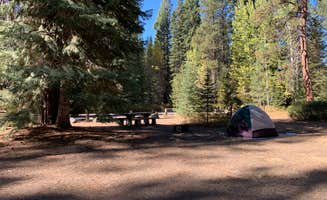


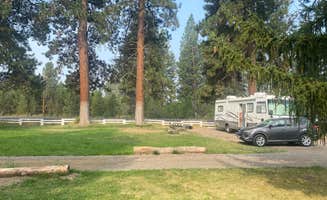
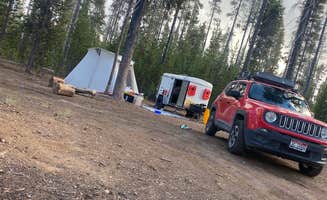


 Scout
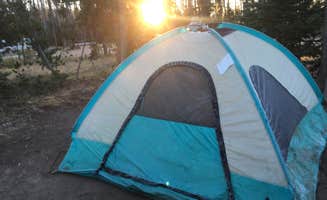
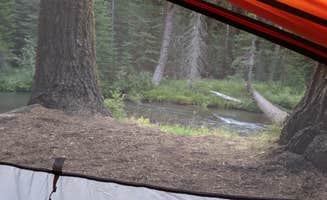
Nice wide open space. Took a nice pullout close to entry. very quiet for the night

 Guide
Nice little koa. Well run and clean. Friendly staff.

 Legend
Didn't stay there but looked good from the hwy.
LegendGreat stop. Lots of space. We have a 36 foot fifth wheel that fit well. It got very cold and had a frost freeze overnight though.
GuidePretty. Several spots which are pretty well secluded from other spots by tall grasses. Easy off road. Close to highway. Would stay here again.
GuideLots of space, quiet and out of the way. Amazing that there is a toilet available and some picnic tables. I visited while it was raining and it was very peaceful. You pull in and see a gate into a big mill house but just go to the left of that and pull onto the gravel road. There are some pullouts along there. I got 2 bars at best with T-Mobile
GuideIt was really nice! The top tier pool is very hot and from there the tiers cool down as they lower. I’d say the second tier pool is the most comfortable to stay in and lounge. Surprised that it was still so popular on a Monday afternoon in late October! There was some trash but I heard it was much better than before. I grabbed some stuff on my way out and other people there seemed motivated and said they would do they same on their way out. Always packing and pack out or do one better and pack out more than you packed in! Pit toilet at the entrance was available but pictured is the one along the trail that was without a door.
LegendLarge flat dirt area perfect for several large rigs, road entering is very good, fire rings, very quiet, close to NP entrance, close to PCP trailhead, not such a great time of year due to the cold at night,highly recommend

 Ranger
We actually loved this little stop. We ended up staying longer than I thought we would because in a heavily forested area, it’s kind of coveted to have clear open skies. Lovely trails and nice bathrooms, bonus is the fire room which we didn’t use but it was a nice amenity that they left open off season.
Camping near Crater Lake National Park typically runs from late spring through early fall, with elevations ranging from 4,000 to over 7,000 feet affecting temperatures and accessibility. The park's volcanic landscape creates distinctive camping environments, with pumice soil that drains quickly after rain but can be dusty during dry periods. Most campgrounds within 30 miles of the park offer quick access to hiking trails that showcase the region's volcanic geology and old-growth forests.
Paddle pristine waters: Jackson F. Kimball State Recreation Site offers access to crystal-clear spring waters ideal for kayaking. "The water is FREEZING cold! The cold hurt my ankles after about 5 min. and I had to get out...and this was in August!" warns one visitor about the chilly temperatures even in summer months.
Explore volcanic features: While camping at Diamond Lake, take time to view the volcanic formations throughout the region. "Clear waters, spectacular Mountain Views. Swimming, hiking, camping, fishing, the possibilities are endless," notes a camper who visited the area.
Stargaze without light pollution: The high elevation and minimal development make for exceptional night viewing. "At night you can see so many stars and meteors. Excellent for watching meteor showers," reports a visitor at Lost Creek Campground, highlighting the astronomical benefits of the park's remote location.
Wildlife viewing: Many campgrounds support diverse wildlife. "We ended up staying in a truck camper and it was perfect for the night. My only complaint was the awful mosquitoes," mentions a camper at Annie Creek Sno-Park, indicating the insects that accompany the rich ecosystem.
Off-season solitude: Many campers enjoy visiting outside peak summer months. "We came on Sunday with no reservations and found a spot. Only $16 per night! Cell service is decent with around 10-16 Mbps," notes a Diamond Lake visitor who appreciated the reasonable rates and connectivity.
Free dispersed options: Several Forest Service areas offer no-cost alternatives to established campgrounds. "Found a decent spot but then hiked up the road more to the top and found a super cool spot. It was a little rougher road, but totally worth it," shares a camper at NF-70 Dispersed Camping about exploring beyond the obvious sites.
Natural water features: The region's springs and creeks are major attractions. "Williamson River has 20 spots well-spaced-out, including at least two pull-throughs. There's several water spickets throughout, two pit-toilets that weren't too gross, a day-use area, a short trail down to the Williamson River," explains a visitor about the well-organized campground layout.
Affordable alternatives: Budget-conscious campers appreciate the lower-cost options near the park. "Just $10 plus $4 per extra vehicle for what's essentially a 'group' site," notes a camper at Williamson River Campground, highlighting the value compared to in-park accommodations.
Winter closures and conditions: Most camping options have limited seasons. "This campground is closed to the public and has been for a couple years. Only fire crews working in the park are allowed to stay here," reported a visitor about Lost Creek Campground, emphasizing the importance of checking current status.
Fire restrictions vary by location: Rules about campfires change based on location and conditions. "We stayed in the upper parking lot as we didn't plan on staying for more than just the one night with an early wake up to go to Crater Lake. There are also two fire pits at the end of the lot so we used one," explains a camper at Annie Creek Sno-Park.
Reserve early for summer weekends: Competition for spots intensifies during peak season. "We knew campsites were FCFS so we arrived by noon and formed a line. At 2pm park staff opened up and we were lucky to get a spot," shares a Mazama Village visitor about the first-come, first-served process.
Road conditions can be challenging: Many dispersed sites require navigating rough terrain. "The road to the campground is a small gravel road that has some serious potholes, but we had no trouble getting there in our car," notes a Lost Creek camper about access issues.
Choose locations with adequate facilities: Families often need more amenities than solo travelers. "I gave this campground 3 stars because it is not for adventurers, it is a campground for families. There is a lot to offer for families though, clean bathrooms, restaurants, paved pathways, easy access to the lake," explains a visitor to Mazama Village Campground.
Look for educational opportunities: Several campgrounds offer learning experiences for children. "We also enjoyed the Junior Ranger program - my son loved seeing the real life Ranger and the parents enjoyed all the knowledge sharing," shares a visitor who stayed at Crater Lake Lodge.
Consider temperature swings: Higher elevations mean significant day-to-night temperature changes. "Be aware that there is a lot of wildlife in the area," warns a camper at Thousand Springs Sno-Park, reminding families to prepare for all conditions and wildlife encounters.
Monitor air quality: Seasonal wildfires can affect camping experiences. "Smoke from Bootleg fire drove me away," notes a camper at Annie Creek, highlighting how regional fires can impact outdoor activities even at some distance.
Check site specifics before arrival: RV campsites vary significantly in size and access. "This campground is in a quiet forest setting although a little highway noise can be heard from a distance. Sites were large and surrounded by lodge pole pines," describes a visitor to Williamson River Campground.
Utilize free dump stations: Several locations offer services without requiring overnight stays. "If you need an RV dump site, head over to Collier, where there's a dump site and water hook-up for free/donation," advises a Williamson River camper.
Consider elevation impacts on vehicle performance: The high elevation affects engines and fuel efficiency. "NF-70 is gravel and in pretty good shape, i.e., no potholes, but is heavily washboarded. This wasn't an issue for the Cherokee, but with a stiffer suspension, I had to limit the RV speed to less than 7 mph to keep from shaking it apart," shares an experienced RVer at Thousand Springs Sno-Park about navigating forest roads.
Plan for variable cellular connectivity: Coverage is inconsistent throughout the region. "AT&T service was fair with 1-2 bars of LTE and speeds up to about 7 MB/s. We were able to get DISH coverage on one of the western satellites at our site through a gap in the trees," reports an RV camper about technological considerations at NF-70 Dispersed Camping.
Frequently Asked Questions
When is the best time of year to camp at Crater Lake National Park?
Summer (July through early September) is the prime camping season at Crater Lake National Park when all facilities are open and temperatures are most comfortable. During this period, Union Creek Campground (when open) offers a variety of spots including riverside sites about 45 minutes from the park. However, summer also brings crowds and occasional smoke from wildfires. Late spring (June) can offer a less crowded experience at places like Williamson River Campground, set in beautiful Ponderosa pines, though some park roads and trails may still be snow-covered. Fall camping (late September) offers colorful foliage and fewer visitors, but prepare for colder nights and potential early snow.
Is dispersed camping allowed near Crater Lake National Park?
While dispersed camping is not permitted within Crater Lake National Park itself, several free dispersed camping options exist nearby. Annie Creek Sno-Park is a popular free camping area less than a mile outside the park boundary, featuring fire pits, toilets, and space for large rigs. For a more remote experience, Mount Thielsen Wilderness offers dispersed camping with gorgeous evening skies and proximity to the park's north entrance, though it can be tricky to find off forest roads. NF-70 Dispersed Camping provides additional free options on National Forest land. Remember to follow Leave No Trace principles and check current regulations with the Forest Service.
Where are the best campgrounds in Crater Lake National Park?
Within the park itself, Lost Creek Campground offers a more intimate experience with tent-only sites. For those wanting easy access to the park, Diamond Lake is just a 20-minute drive from the park entrance and provides excellent lake access for kayaking. Other top options include Thielsen View Campground, located just 15 miles from the park with lakeside sites, and Farewell Bend Campground, which features clean facilities, flush toilets, and hiking trails. Most campgrounds near Crater Lake fill quickly during summer months, so reservations are strongly recommended.
What are the RV camping facilities at Crater Lake National Park?
Crater Lake RV Park offers sites nestled among large pines about 25 miles from the national park. It features fairly new restrooms and showers, making it a convenient base for park visits. Another excellent option is Waterwheel RV Park & Campground, which provides 50-amp electric service and water hookups, with full hookups available in the middle row of the park. The campground has been making improvements under current ownership with helpful camp hosts. For RVers seeking alternatives, Broken Arrow Campground is just minutes from both Diamond Lake and the park's north entrance, offering free showers and a dump station.
Keep Exploring