Camping near High View, West Virginia offers access to forested mountain terrain within the George Washington National Forest region at elevations ranging from 900-3,000 feet. The area's weather can shift quickly with summer temperatures typically 10-15 degrees cooler than surrounding valleys. Winter camping requires preparation for temperatures that can drop below 20°F, with occasional snow accumulation from November through March.
What to do
Fishing opportunities: The area offers multiple stocked ponds and lakes for anglers. At The Cove Campground, "the kids were able to fish for hours at the two fishing ponds, which both were stocked with bass and bluegill," reports Jason G. Another camper notes the "lake water was crystal clear and is surrounded by beautiful views of the mountains."
Hiking trails: Multiple trail networks provide access to mountain terrain. Near Trout Pond Recreation Area, "We hiked around Rock Cliff Lake and observed petrified wood," writes Fred F. The area features "an overlook (Lina Constable Overlook) to hike to right off the camp loop but it's 1 mile steep incline at times but worth every step. Gorgeous!" according to Laure D.
Water recreation: During summer months, several campgrounds offer swimming areas. Trout Pond Recreation Area features "Nice hiking, kayaking & swimming" and a "sand beach" with "water so clean that it was throbbing with freshwater jellyfish," according to Fred F. Local rivers provide additional options as "We found a river access point perfect for swimming and wading" within a 10-minute drive from Fort Valley Ranch.
What campers like
Privacy between sites: Many campgrounds offer good spacing between campsites. At Big Run State Park Campground, campers appreciate that "There was a lot of space between each site and it was very peaceful," as Aakansha J. notes. Another visitor mentions, "The bare campsites are nicer - they are more spread out, wooded, and some of them are located right along the stream."
Natural soundscapes: The region's waterways create peaceful camping environments. Big Run's riverside sites are popular as one camper enjoyed "the sound of the river as white noise!" while Mark K. found "it is a pleasure to sleep in nature with nothing but birdsong and the sound of the rushing creek."
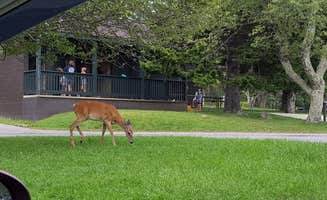
Wildlife viewing: Many campgrounds offer opportunities to see native animals. At Big Meadows Campground, "You will definitely see deer in the campground as they walk through and browse the understory. They are unafraid of humans unless directly approached," writes Veronica S. Another camper mentions, "We saw many deer and bear while camping."
What you should know
Limited cell service: Connectivity is minimal throughout the region. At The Cove Campground, "WiFi signal weak and intermittent, even close to router," according to Nancy L. At Trout Pond, there is "no cell service" as John B. confirms, and the campground installed "a pay phone, which is helpful because there is no cell service. In case of an emergency, you are a 20 minute drive to call for help."
Bathroom facilities vary: Quality and availability of restrooms differs between campgrounds. At The Cove, one camper noted showers "left much to be desired" with "Cobwebs along ceiling, dim lighting and worn paint added to the overall dinginess." However, at Fort Valley Ranch, "All the bathrooms and showers were remarkably clean and well-maintained."
Road conditions: Some access roads can be challenging. Chris J. warns about Trout Pond: "There are some pretty steep inclines to even get to the campgrounds. Unless you have a powerful vehicle pulling your camper, it would help to release your water supply and fill up when you get to the campground."
Tips for camping with families
Campgrounds with kid-friendly activities: Look for sites with dedicated recreation areas. The Cove Campground offers "a small beach, picnic tables everywhere, a volleyball ball sand court, a dock, you can fish in the lake, rent non motorboats" according to Shanna B. This makes it "a place to have fun but in slow mode."
Educational opportunities: Take advantage of ranger programs when available. At Big Meadows Campground, there's a "Nice amphitheater with interesting ranger programs," reports Kim L., who also notes it's a "meticulously clean with daily restroom cleaning and trash pick up" environment suitable for families.
Bug preparation: Depending on season, insects can be problematic. At Big Run State Park, "the mosquitos sucked," according to Aakansha J., while at Big Meadows, one camper warns "The bugs when we got here were kinda crazy. They don't bite but they swarm your head and try to enter every orifice for some reason. A head net was helpful."
Tips from RVers
Site selection for larger rigs: Several equestrian campgrounds near High View, West Virginia can accommodate bigger setups. At Fort Valley Ranch, "All the RV sites were impressively level, with only minimal leveling needed" and "site 3 was an easy level pull-through site, making the setup/breakdown very quick and painless," according to Jason G.
Road accessibility: Despite mountain terrain, many horse campgrounds can handle larger vehicles. Jason G. notes, "I was initially concerned about the road leading into the campground, as my rig is over 50 feet in total length. However, we were surprised that the winding roads presented no issues for us. The access was smooth and hassle-free."
Utility hookups: Water access points may be limited at some campgrounds. At The Cove Campground, Christopher K. observed, "There are 4 water spigots in camp 1. However all the travel trailers hooked up, which means you either had to make friends or disconnect their water in order to have access."



 Scout
Scout


