Horse trails crisscross the mountains near New Castle, Virginia, where elevations range from 1,300 to 4,000 feet. The region sits at the junction of the Allegheny and Blue Ridge Mountains, creating diverse terrain for equestrian camping opportunities. Trail conditions vary seasonally, with summer temperatures averaging 75-85°F and winters bringing frequent snowfall at higher elevations.
What to do
Trail riding opportunities: Several parks near New Castle offer dedicated equestrian trails connecting campsites. At Douthat State Park Campground, riders appreciate "bike trails to go ride around on your bike all day" according to Jonny D., with these same trails welcoming horses in designated areas. The park features "a sprawling camping complex" with "Beaver Dam Campground providing equestrian facilities" as noted by Jeremy W.
Fishing access: Anglers can access stocked waterways directly from many campsites. John R. explains that at Douthat State Park, "It's $8 a day for a fishing pass and you can rent John boats or kayaks here as well. In season the lake and creek are stocked with plenty of Rainbow trout. You can keep them for dinner if you like!"
Swimming spots: Natural swimming areas provide relief during summer months. The Greenbrier River offers accessible swimming points near many campsites. Dave V. notes that at Greenbrier River Trail Mile Post 9.5 Primitive Campsite, there's a "Great Swimming Rock Trail South" making it easy to cool off after a day on horseback.
What campers like
Clean facilities: Many equestrian campgrounds maintain well-kept amenities despite their rustic nature. At Fairy Stone State Park Campground, Katie M. found "The Yurt overall was very clean and cozy... The bathrooms and showers were fine and in close walking distance." This attention to cleanliness extends to horse-friendly areas as well.
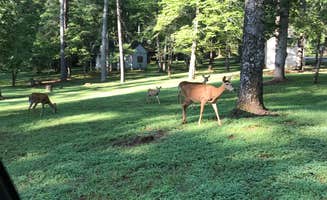
Wildlife viewing: The region's diverse ecosystems support abundant wildlife visible from trails and campsites. Riding through the area increases wildlife encounters. Dave V. notes that at Greenbrier River Trail Mile Post 49.3 Primitive Campsite, "Because of its relative remoteness and light traffic, wildlife flourishes along the GRT. This is bear country so I would recommend utilizing a bear bag or bear canister for your food and toiletries."
Variety of accommodation options: Equestrian campers can choose from primitive sites to cabins based on comfort needs. At Don's Cab-Inns Campground, Mel T. found "These cabins have plenty of room for a family or couple getaway. The AC is very welcoming after a long hot day outside and mini fridge is perfect to unload your cooler from traveling." This provides options for horse owners wanting more comfort after trail rides.
What you should know
Weather preparedness: The mountain location means rapid weather changes, even in summer. At Bolar Mountain Recreation Area, Nicole R. advises, "The campground Bolar Mountain Rec Area is on Lake Moomaw. We had the pleasure of having a campsite with lake view and access both times... We like going during the week in the summer, it can get busy on the lake on weekends."
Water availability: Hand pumps at primitive sites may be inoperable seasonally. Dave V. reports that at Greenbrier River Trail Mile Post 49.3, there is "No water pump" so you need to "fill up before you get there. Although, if you utilize a filter, you can draw water from the river or the tributary down the trail several hundred feet."
Reservation strategies: Many horse-friendly campsites operate on first-come, first-served basis. For the Greenbrier River Trail campsites, Dave V. emphasizes, "All the primitive campsites positioned along the Greenbrier River Trail (GRT) are free, first-come, first-served. Note that some offer more amenities than others, so those will likely be the sought after locations."
Tips for camping with families
Educational activities: Parks offer ranger programs about local ecology and history. Bridget H. shares that at Fairy Stone State Park, "We hunted and found fairy stones which made the trip that much more fun... we had a great time riding bikes and hiking." These activities complement horseback riding for children needing variety.
Playground access: Several campgrounds include designated play areas near horse facilities. Russell C. notes that at Fairy Stone State Park, "The programming was also amazing for our eight and four-year old boys. Ranger Lexie hunted legendary fairystones with our kids and they haven't stopped talking about the magic of the hunt!"
Swimming options: Kid-friendly water access points provide cooling off spots after trail rides. Bonnie T. states that Fairy Stone State Park is "Perfect places for families. We loved all the ranger programs, especially finding all the fairy stones. Kayaking was fun."
Tips from RVers
Site selection: RV sites accommodating horse trailers require advance planning. Jeremy W. explains that at Douthat State Park, "Whispering Pines is a few miles away along the entry road and has a different character. It's a very flat and wide-open campground perfect for big RVs with much larger sites." These areas often work well for equestrian campers with trailers.
Hookup availability: Electric and water connections vary among equestrian campgrounds. Terry F. notes that at Don's Cab-Inns, there's "electric on the site, water and dump station located nearby. Half a dozen RV spaces and cabin rentals and yurts."
Road conditions: Access roads to horse campgrounds can challenge larger rigs. Jeremy W. cautions that at Douthat State Park, "Caution should be used with large rigs as the low-water bridge to White Oak has steep approach and departure angles."




 Legend


