Free camping near Pawleys Island, South Carolina consists primarily of primitive sites within Francis Marion National Forest. The camping areas range from riverfront locations suitable for kayaking to secluded forest sites under live oak canopies. Most dispersed sites in this region require visitors to navigate unpaved forest service roads that can deteriorate significantly during wet weather seasons, particularly in winter and early spring.
What to do
Kayaking opportunities: At Pitts Landing Dispersed, the river provides excellent paddling opportunities. "The river is gorgeous and we spent a good amount of our time here kayaking," notes one camper who stayed for a week during hurricane season.
Wildlife observation: Free camping spots near Pawleys Island offer chances to spot diverse wildlife. Near Guilliard Lake, campers report encounters with "Bald eagles, owls, otter, fish. It's beautiful."
Hiking trails: Several dispersed camping areas connect to trail systems. At Halfway Creek - Dispersed Camping, "Hiking trails are nice and groomed. Very peaceful and everyone stays to themselves."
What campers like
Affordable seclusion: No-cost dispersed camping attracts those seeking budget-friendly alternatives to commercial campgrounds. One reviewer described Halfway Creek as "one of those 'nearest far away places' due to the seclusion."
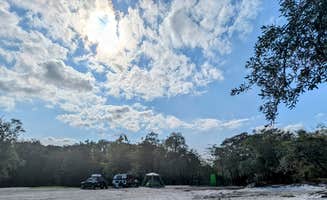
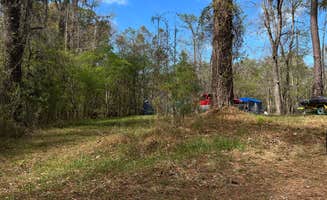
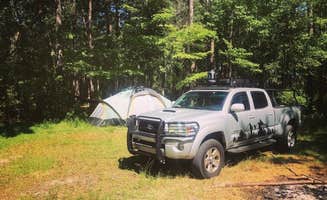
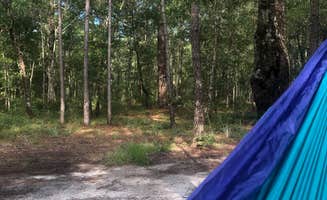
Spacious camping areas: Many sites offer ample room for setting up camp. Halfway Creek has "several large areas with plenty of room for tent or hammock camping" and includes options "along the dirt loop road, a big field, and a few areas tucked back in the trees."
Minimal crowds: During certain seasons, campers can have entire areas to themselves. "I stayed out here for a full night. The area has been cleaned up and a few times during the day and night a police officer patrolled the area. Just smiled and waved," reports a visitor at Halfway Creek.
What you should know
Permit requirements: Several dispersed camping areas in Francis Marion National Forest require permits before overnight stays. Call the district ranger office to obtain current information about permit acquisition procedures.
Road conditions: Access roads to many dispersed sites present challenges. A visitor to Halfway Creek Primitive Camping advised, "You can pull your car in almost about anywhere, just be aware of low hanging branches." Loose sand presents hazards for vehicles without sufficient clearance.
Trash management: Bring trash bags and plan to pack out all waste. Multiple campers report trash accumulation issues, with one noting that at some sites "the roundabout is just completely full of trash, all the time."
Tips for camping with families
Bug preparation: South Carolina's coastal forests harbor significant insect populations. One camper at Halfway Creek Primitive noted they "Had to deal with a ton of insects," making repellent and protective clothing essential for children.
Security considerations: Some dispersed camping areas have varied visitor populations. One camper suggests families should "Stay at your own risk," while another notes that Pitts Landing becomes "Very busy during the day with local fishermen."
Site selection: Scout potential camping spots before committing, especially when traveling with children. At Pitts Landing, "There were a few sites that are not safe to drive to because of very loose sand. It is safer to park and explore on foot before driving up to those sites."
Tips from RVers
Size limitations: Large rigs face significant restrictions at dispersed sites near Pawleys Island. One experienced camper notes, "This is not a campground for anyone with a large rig or RV."
Limited pull-through options: Only certain areas can accommodate trailers. At Halfway Creek, there are "only a couple spots for an RV or Travel Trailer to park, but they are pull through along the side of the main loop."
Cell service considerations: Connectivity varies significantly between dispersed sites. Cell signal with Verizon reported as "2 bars seemed ok" near Guilliard Lake, but other carriers may have limited or no service in more remote forest locations.







 Ranger


