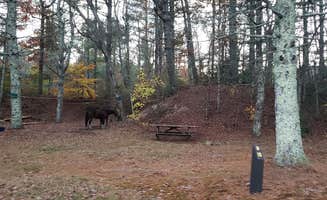
Equestrian campgrounds near Kingston, Rhode Island provide specialized facilities for riders and their horses. Frog Hollow Horse Camp at Pachaug State Forest in Voluntown, Connecticut is located 30 miles from Kingston and features a loop of campsites designed specifically for horses and their owners. The terrain throughout this area is primarily coastal plain transitioning to low hills with elevations ranging from sea level to around 400 feet, creating varied terrain for trail riding.
What to do
Trail riding on dedicated loops: At Frog Hollow Horse Camp, riders have immediate access to multiple trail systems. According to camper Jean C., "Three horseback riding loops leave from the campground. There's also fishing and hiking available in the forest."
Swimming and fishing: The Charge Pond Campground at Myles Standish State Forest offers water activities for both campers and horses. As Kyle C. notes, "The pond water was very clear, seeing as they are fed from natural springs under the ponds." Another visitor mentioned, "We kayaked one morning and enjoyed watching the people catching good sized fish around us."
Forest exploration: Miles of woodland trails provide riding opportunities throughout Pachaug State Forest. The forest surrounds Frog Hollow Horse Camp with mixed hardwood and conifer stands typical of southern New England. The campground serves as an ideal base for forest exploration.
What campers like
Spacious sites for horse trailers: At LeGrand Reynolds Horsemen's Camping Area in Exeter, Rhode Island, the campground layout accommodates both camping equipment and horse trailers. Unlike standard campsites, these specialized areas include designated horseline spots away from tenting areas.
Privacy and natural settings: Campers at Wolf Den Campground appreciate the natural surroundings. Jean C. reports that "The parking pads are paved and a few have overhanging branches, but the trees provide separation and some shade on largely open sites that tend to open up toward the back with open areas for pitching tents."
Clean facilities: Many equestrian campgrounds maintain basic but functional facilities. Gary G. noted about Wolf Den, "The park was completely cleaned up from any damage or debris, all in great shape. No other campers here when we arrived, so totally silent. No road noise."
What you should know
Seasonal operations: Most horse campgrounds in the region operate seasonally. For example, Wolf Den Campground runs "May 26 to September 4," according to their listing information.
Limited amenities: The Preserve Club and Residences is the exception to the rule for luxury amenities, but most horse camps focus on practical needs rather than comfort. Chris M. explains it's "a members/owners only community which is New England's most amenity rich properties."
Reservation systems vary: Frog Hollow Horse Camp operates on a first-come, first-served basis without reservations. During peak riding seasons (May-October), arriving early is recommended, especially on weekends.
Water availability: Most horse campgrounds provide drinking water for both people and animals. Water spigots are typically centrally located rather than at individual sites.
Tips for camping with families
Pack for varied weather: New England weather can change quickly, particularly in spring and fall. Bring layers and rain gear even in summer months.
Playground access: Some campgrounds like Wolf Den include play areas. As Jean C. mentions, "There's a small playground in the middle of the loop, a number of hiking trails throughout the park along with a few geocaches."
Consider non-horse activities: Normandy Farms Campground offers extensive family options about 30 miles from Kingston. Liz W. shares, "We stayed here for a few nights when they celebrated Halloween 🎃. It is super easy to get around. They had tons of festive activities. They have an indoor and an outdoor pool."
Plan for limited connectivity: Cell service is inconsistent throughout the forested areas. Desiree M. notes at Myles Standish, "Cell coverage is iffy in a lot of spots."
Tips from RVers
Site selection matters: Choose sites based on your trailer length and setup. Gary G. recommends at Wolf Den: "We picked site 33 for the best shade and longer pad."
Hookup limitations: Most horse camps offer limited or no hookups. While Frog Hollow doesn't provide electrical or sewer connections, LeGrand Reynolds Horsemen's Camping Area does include electric hookups with both 30-amp and 50-amp service plus water and sewer connections.
Dump station access: When staying at non-hookup sites, plan dump station visits. Many state forests like Myles Standish provide dump stations at campground entrances for convenience.
Level site challenges: Prepare for potentially uneven ground. Kyle C. mentions, "Some sites are on slight inclines and have a lot of roots so it makes having more than one tent hard."




 Legend


