Dispersed camping near Cherry Point, North Carolina centers on Croatan National Forest and Cape Lookout National Seashore. The region experiences hot, humid summers with temperatures frequently exceeding 90°F and mild winters averaging 40-60°F. Hurricane season (June through November) significantly impacts camping access, with several forest roads frequently closed due to storm damage. Primitive sites lack amenities but provide direct access to coastal ecosystems and maritime forests.
What to do
Fishing at multiple locations: The beaches at South Core Banks provide excellent surf fishing opportunities. According to one visitor at South Core Banks Beach Camping, "Love this island! No crowds, lots of open beach, and plenty of fish! If you're looking to camp on the beach and escape the crowds, you've found your spot." Fishing permits are required.
Wildlife observation: Campers frequently encounter diverse wildlife throughout the region. At Cape Lookout National Seashore, campers report, "We had three young male horses that were always roaming within sight. They even walked close by our campsite." Binoculars and cameras are recommended equipment.
Cycling on packed sand: Beach cycling is possible during low tide periods. One camper noted, "We took bikes and enjoyed cycling around at low tide. Be sure to camp above the high tide zone, which is black sand." Cyclists should check tide charts before planning rides.
What campers like
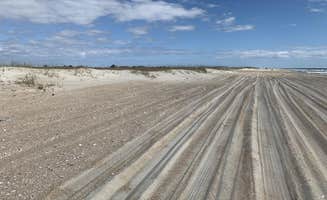
Beach solitude: The remote nature of South Core Banks provides isolation from typical beach crowds. A camper explained, "See someone nearby, cool, whatever. Drive somewhere else and set camp." The 26-mile stretch of undeveloped shoreline allows ample space between campsites.
Natural phenomena: Seasonal bioluminescence appears in spring waters. "Show up late in April, early May and you will get to see the bioluminescent plankton wash up sound side, and a hike will leave glow in the dark footprints." This phenomenon is most visible during new moon phases when ambient light is minimal.
Unique ecosystems: Croatan National Forest features rare carnivorous plants in its wetlands. A visitor noted, "This is not a 'campground' per se, but rather a large area of national forest where dispersed camping is allowed. This is about as close to nature as it gets." The forest contains one of the largest populations of Venus flytraps in their native range.
What you should know
Access limitations: Many forest roads remain impassable without specialized vehicles. A recent visitor to Croatan reported, "The dirt roads were not maintained and ridiculously bumpy and unmanageable for smaller cars." Some campers have found alternative solutions: "The path is blocked at about halfway down by concrete barriers and downed trees. So I pulled my Ford Ranger in the pines beside the path and slept there."
Ferry requirements: Cape Lookout requires advance planning. A camper explained, "The ferry is $135+ for vehicles, plus $20 per person roundtrip. The beach driving permit is $75 unless you buy it by March." Reservations should be made 2-3 weeks in advance during peak season.
Seasonal considerations: Summer brings intense insect activity, while fall offers turtle hatching opportunities. "Show up in October and you may get to help the rangers protect the sea turtles as they hatch." Bug spray with DEET is essential between May and September.
Tips for camping with families
Water safety awareness: Tide patterns affect both camping areas and access routes. A camper advised, "There are narrow/impassable points on the beach at high tide, but there are ramps to the back road every mile." Families should bring tide charts and plan activities accordingly.
Bathroom access planning: Limited facilities exist only at specific points. One review noted, "There are restrooms at the lighthouse, and one restroom at the end of the walkway that crosses the dunes to the beach." Families should pack portable toilet options for nighttime needs.
Educational opportunities: Dixon Landing and surrounding areas provide opportunities to teach children about coastal ecosystems. Rangers occasionally lead educational programs at the Cape Lookout lighthouse during summer months, focusing on marine life, coastal geology, and maritime history.
Tips from RVers
Recovery equipment necessity: Four-wheel drive and self-rescue gear are essential for beach camping. A seasoned visitor warned, "That includes 4x4 AND recovery equipment. Tow service ain't nowhere to be found. So, sorry 2WD Chevy Tahoe with aggressive tires - stay home." RVers should carry recovery boards, shovels, tire deflators, and portable compressors.
Campsite selection strategies: Positioning affects comfort significantly in coastal environments. "The constant breeze on the beach side keeps the mosquitos at bay, and you will get eaten alive on the sound side." RVs should position doors away from prevailing winds to minimize sand intrusion.
Supply planning: Long Point Boat Launch and similar remote areas require complete self-sufficiency. "You should also prepare everything in advance - food, water, essentials. There ain't no corner market here." RVers typically need 2 gallons of water per person per day, with additional supplies for unexpected weather delays.





 Guide
Guide


