Captain Clark Fishing Access Site provides dispersed camping along the Yellowstone River with four primitive campsites near Hardin, Montana. Summer temperatures typically range from 85-95°F during day, cooling to 50-60°F at night. Fall visitors will find fewer insects and milder daytime temperatures, with cottonwood trees providing seasonal color changes along the riverbank.
What to do
**Bird watching: Observe diverse species along the Yellowstone River corridor. At Captain Clark Fishing Access Site, visitors can spot numerous bird species. "We saw several geese. Heard several wild turkeys but never saw them. And we were greeted with an amazing sunrise right before we set out on our way," notes Kevin C..
**Historical exploration: Visit nearby landmarks within short driving distance. The area contains significant Lewis and Clark Expedition landmarks. "We backtracked the next morning to explore Pompey's Pillar National Monument," shares Dorothy J., who found the fishing access site convenient for historical sightseeing.
**Swimming: Find protected areas away from the main current. The Yellowstone River requires caution, but safer areas exist. "The Yellowstone River is a fast moving and dangerous river but there is a great swimming hole on the other side of the boat launch," reports Morgan B..
What campers like
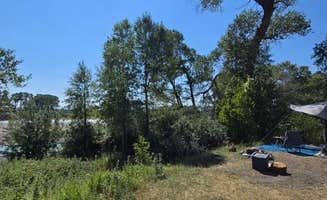
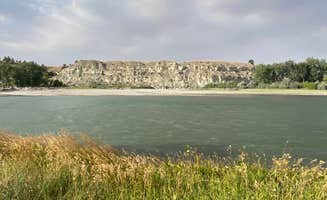
**Spacious riverfront sites: Each site offers direct river views and ample space. Campers appreciate the layout and privacy between sites. "We loved our spacious spot with an amazing view of the river. Few bugs in September," mentions Dorothy J..
**Shade coverage: Large trees provide natural shelter from summer sun. The mature trees are a standout feature. "We were lucky enough to get the site under this truly massive tree that was likely here when captain clark was on his expedition," writes Kevin C..
**Quiet setting: Despite proximity to interstate, sites maintain peaceful atmosphere. The distance from the highway creates a buffer from traffic noise. "It was close enough to I94 to feel convenient but far enough away that the noise from the freeway wasn't bothersome," explains a camper who valued the balance between accessibility and tranquility.
What you should know
**Conservation license requirement: Montana Conservation License costs $10 for non-residents. This requirement applies to Captain Clark but not all nearby areas. "A Montana State Parks Conservation Permit is now required to camp here. Your permit is good all year," advises Mike C., who also notes the permit can be purchased online.
**Limited firewood availability: No firewood sold at site or immediate vicinity. Plan ahead for campfires by purchasing wood before arrival. "There is no place nearby to purchase firewood. Stop in Miles City or Billings on your way in depending on the direction you're coming from if you need it," recommends a recent visitor.
**Insect conditions: Mosquitoes can be problematic, particularly near marshy areas. Bug activity varies by season and location. "Pretty buggy. Bring your mosquito repellent," warns Zach S. about conditions at Captain Clark.
Tips for camping with families
**Swimming safety: Use designated swimming areas away from main river current. The Yellowstone River requires caution with children. "The Yellowstone River is a fast moving and dangerous river but there is a great swimming hole on the other side of the boat launch," notes Morgan B..
**Wildlife viewing opportunities: Morning and evening offer best wildlife sightings. Free camping near Hardin, Montana provides excellent nature observation chances. "LOTS of cool bird activity," reports a camper who enjoyed watching riverside wildlife.
**Site selection: Choose sites farther from boat ramp for less traffic. Boating activity can create daytime noise and disruption. "The spots are relatively secluded," mentions a visitor who found the camping area reasonably private despite boating activity.
Tips from RVers
**Length restrictions: 20-foot limit applies to both tow vehicles and trailers. This restriction limits larger RVs from accessing Captain Clark. "Length limit on vehicles is 20 feet. They clarify 20 ft tow vehicle and 20 ft trailer. Don't know how strict they are on this. It would be tough to get anything big in here anyway," explains Mike C..
**Access road considerations: Dirt roads can become problematic in wet weather. Plan arrival during dry conditions when possible. "A little slow going in on the dirt road. Could be slick if rainy," cautions a camper who navigated the entry road.
**Small RV compatibility: Smaller trailers and campers work best at riverfront sites. The area accommodates modest RVs despite size limitations. "A small tow behind camper would fit in here," confirms Luke H. regarding the suitability for compact RVs.




 Guide
Guide


