Equestrian camping opportunities exist throughout the region surrounding North Seekonk, Massachusetts. The area's mix of forested state land and recreational areas creates accessible trails for riders at elevations ranging from 200-500 feet above sea level. Camping options typically remain open from April through November, with some sites requiring advance reservations during peak summer months.
What to do
Trail riding access: Normandy Farms Campground offers proximity to Foxboro State Park with over 20 miles of hiking trails about a mile from the campground. The forest trails provide moderate terrain suitable for day rides. "About a mile from the campground is Foxboro State Park where you will find 20+ miles of hiking trails," confirms reviewer Nancy W.
Pond fishing opportunities: Charge Pond Campground features several spring-fed kettle ponds for fishing. "We kayaked one morning and enjoyed watching the people catching good sized fish around us," notes reviewer Kim R. The ponds contain various freshwater species with clear water conditions ideal for both shore and boat fishing.
Hiking trail exploration: Multiple trail networks connect through the region's state forests. "There are several miles of bile trails that were very enjoyable," reports Kyle C. about Myles Standish State Forest. Trails range from beginner-friendly paths to intermediate routes with varied terrain and wildlife viewing opportunities.
What campers like
Private campsites: Ponkapoag Camp offers secluded camping areas despite being close to Boston. "Ponky is a hidden jem! Minutes from Boston, feels Miles away," writes Stu L. The camp features rustic cabins and tent sites dispersed throughout wooded areas surrounding the pond.
Clean facilities: The maintenance standards at equestrian campgrounds vary considerably. "Bathrooms were clean and staff were friendly. Would definitely stay again," shares reviewer 175 P. about Wolf Den Campground. Many campers appreciate the regular cleaning schedules at established campgrounds.
Water recreation: Swimming and paddling options exist at several locations. "The pond water was very clear, seeing as they are fed from natural springs under the ponds," explains Kyle C. about the kettle ponds at Myles Standish. The sandy beaches at many pond areas provide easy water access for campers seeking cooling options during summer months.
What you should know
Reservation requirements: Most established campgrounds require advance booking, especially during summer weekends. "We stayed on a Tuesday night right after hurricane Henri. The park was completely cleaned up from any damage or debris, all in great shape. No other campers here when we arrived, so totally silent," reports Gary G. about Wolf Den Campground, highlighting the difference between weekday and weekend occupancy.
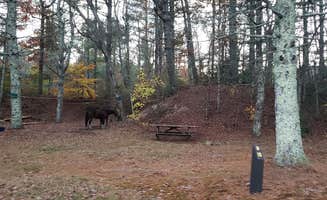
Horse camping specifics: Frog Hollow Horse Camp provides basic equestrian accommodations with space for trailers and highlines. "There's space for your camping gear as well as a trailer and horseline. About half the sites were occupied in late October," notes Jean C. Most horse-specific sites operate on a first-come basis rather than reservations.
Alcohol regulations: State parks in Massachusetts prohibit alcohol, unlike private campgrounds. "When you are sitting by the campfire, sometimes, chilling with a beer or another adult beverage is nice. Not in Massachusetts State Parks. No alcohol allowed," explains Randy R. This restriction applies to all state-operated facilities but not necessarily private campgrounds.
Tips for camping with families
Playground access: Many campgrounds include play areas for children. "There's a small playground in the middle of the loop, a number of hiking trails throughout the park along with a few geocaches," describes Jean C. about Wolf Den Campground. These features provide entertainment options during downtime between other activities.
Swimming facilities: The Preserve Club and Residences and other locations offer pond swimming areas with dedicated beach sections. "The beach (at least at Charged Pond) had a nice sandy section and a bathhouse," reports Kim R. about facilities at Myles Standish State Forest. Most swimming areas lack lifeguards, so parental supervision remains essential.
Activity diversity: Campgrounds often provide scheduled programming during peak seasons. "There are multiple activities for adults and children," shares Sandie B. about Normandy Farms. These organized events typically occur on weekends and holidays, offering structured engagement opportunities beyond self-directed recreation.
Tips from RVers
Site sizing considerations: Many horse campgrounds accommodate RVs but with limitations. "Campsites are located around a loop with a couple of composting toilets near the entrance. Water is available," explains Jean C. about Frog Hollow Horse Camp, where sites can handle modest RVs alongside horse trailers.
Limited hookup availability: Most equestrian-focused campgrounds provide minimal RV services. "The parking pads are paved and a few have overhanging branches, but the trees provide separation and some shade on largely open sites that tend to open up toward the back with open areas for pitching tents. Sites have fire rings with grills and picnic tables. Site 20 is the only one with electric," notes Jean C. about Wolf Den Campground.
Level site selection: RV campers should research specific site characteristics before booking. "Most sites are relatively short level pads, with little or no shade, but very pleasant. We picked site 33 for the best shade and longer pad," advises Gary G. about Wolf Den Campground. Site leveling remains an important consideration when selecting locations for larger rigs.




 Legend


