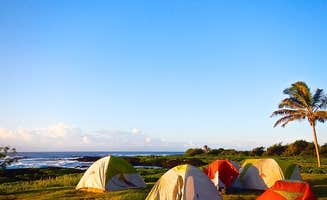
Camping spots near Hawaiian Paradise Park, Hawaii range from sea level to over 4,000 feet in elevation at Hawaii Volcanoes National Park, creating significant climate variations within a 30-mile radius. The eastern Puna district receives between 100-200 inches of rainfall annually, making waterproof gear essential for campers year-round. Most campsites in this region are situated on volcanic soil with minimal shade at coastal locations.
What to do
Volcano exploration: At Nāmakanipaio Campground, visitors can access numerous volcanic formations within minutes. "If you're planning on staying here I'd definitely recommend getting here early! Once there though it was a great site. Super friendly people and beautiful area!" notes camper Brittany R. The campground provides an excellent base for exploring multiple trails.
Disc golf: Several farm-based campgrounds offer recreational activities beyond typical camping. "The outdoor amenities are a nice touch, I enjoyed playing with the disc golf and walking around the pond in the morning," writes Jen T. about Moon Garden Farm Getaway. Many private properties include recreational features not found at public campsites.
Sunrise viewing: Early risers can witness spectacular sunrises from eastward-facing campsites. "If you wake up early enough you can get a beautiful sunrise over a cattle farm," reports a Moon Garden Farm visitor. Morning fog commonly burns off by 8-9am, making early morning the optimal time for photography.
What campers like
Fresh fruit accessibility: Wild Blue Water Ranch offers direct access to tropical fruits for campers. "They really do have lots of fruit trees you can pick. We added it to the fruit we got at the farmer's market, and they offered us fresh coconut on the last morning," shares Sar. Many properties allow seasonal fruit harvesting as a camping perk.
Hot water availability: Despite remote locations, many sites provide hot showers. "The bathrooms and showers are super clean with warm running water," notes a Moon Garden Farm camper. This stands in contrast to national park sites where shower facilities may be limited or unavailable.
Convenient location: Aloha Acres provides strategic positioning for island exploration. "The property was easy to find, gorgeous and super convenient to all of the things we wanted to do on the Big Island," writes Jennifer H. Most private campgrounds place campers within 30 minutes of beaches, waterfalls, and lava viewing areas.
What you should know
Rain preparedness: Sudden downpours occur frequently in the Puna district. "The grassy road during the rain gets slippery if you don't have 4 wheel but we never got stuck. I just hate how much we tore up the grass, made me feel bad every time we returned to camp," explains a Moon Garden Farm camper. Many access roads become challenging during heavy rain.
Temperature variations: The climate changes dramatically with elevation. "The higher altitude kept the temperatures in the low 60's and perfect for sleeping. Not very many campers so it was a peaceful evening," reports Eric N. about Treehouse.Farm. Pack layers for temperature changes, particularly if visiting multiple campgrounds at different elevations.
Limited facilities: Some private campgrounds offer minimal amenities. "No stores or restaurants in walking distance. So many birds and other loud creatures singing all night long," reports Aubrey G. about camping in Hilo. Stock up on supplies before arrival as rural areas have few shopping options.
Tips for camping with families
Early arrival strategy: Competition for limited sites requires planning. "We showed up in the early afternoon and got the last spot available but only because the original person who got it had upgraded to a cabin," advises Brittany R. about Nāmakanipaio Campground. Many public campgrounds fill by noon, especially during peak seasons.
Wildlife observation opportunities: Children can engage with nature through wildlife viewing. "Talk to locals in Pahoa and Keaau for tips on how to see the best views of the volcano," recommends Tarah W., highlighting the value of local knowledge for family activities.
Cabin options: For families seeking more comfort, Lava Rock Glamping offers alternatives to tent camping. "Glamping in the forests of Hawai'i" provides a middle ground between traditional camping and resort accommodations, with electricity and more substantial shelter during rain events.
Tips from RVers
Limited hookup availability: Most campgrounds near Hawaiian Paradise Park offer minimal RV infrastructure. "Roddy efficient grass sites - big enough for a couple or snag multiple for a family," notes Jennifer H. about Nāmakanipaio Campground. RVers should prepare for primarily dry camping with few electrical or water hookups.
Site size considerations: Most private campgrounds accommodate smaller RVs only. With typically 2-8 sites per property, advance reservation is essential for RV campers, as turning around on narrow access roads presents challenges for larger vehicles.




 Guide
Guide