Equestrian camping near Forks of Salmon, California attracts riders seeking access to the extensive trail systems within Klamath National Forest and Trinity Alps Wilderness. The region sits at elevations ranging from 1,300 to over 8,000 feet, creating diverse riding conditions across steep terrain. Summer temperatures typically reach 85-95°F during daylight hours with cool evenings dropping to 45-55°F, while access roads remain consistently challenging for horse trailers.
What to do
Trail riding at Trinity Alps Wilderness: Access over 55 miles of maintained horse trails from Lovers Camp Trailhead where backpackers report "We just finished a backpacking trip in marble valley and sky high lakes area, both accessible about 5+ miles from the Lovers Camp Trailhead. It was absolutely beautiful! So much to do in that area and such great views."
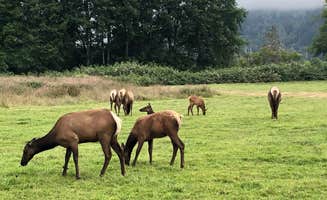
Wildlife viewing at Redwood National Park: Take day rides from Elam Backcountry Camp where riders can observe Roosevelt elk and coastal wildlife. One camper noted it "is the first one you come upon while hiking in from the Orick Horse Trail Trailhead. There are picnic tables and two bear lockers, (there's another by the horse coral)."
Fishing access points: Many horse trails connect to prime fishing spots on the Trinity River and its tributaries. Bring collapsible fishing gear as many riders report successful catch-and-release trout fishing during summer months.
What campers like
Spacious sites for horse trailers: Lacks Creek BLM offers dispersed camping with room for larger rigs. "Not much more to say that others haven't. Clean, with a beautiful view. The whole BLM management area is well developed and has signs to guide you. There are spots all along pine ridge road. Campsites have picnic tables and fire rings."
Natural water sources: Seasonal creeks provide natural water access for horses at select camps during early summer. Riders should verify water availability before trips as many sources dry up by August.
Shade availability: Horse Flat Campground provides significant tree cover for summer camping. A visitor mentioned "The canopy is dense enough that there is very little sunlight. There are a few sites below the road that are nicer & next to creek but parking is sparse."
What you should know
Road conditions: Most access roads require high-clearance vehicles with suitable trailer hitches. One camper at Lacks Creek noted: "As of Sept '25, chunks of the gravel road were under construction; some blind, narrow turns, but nothing too intense; and dips, washouts, and big exposed rocks, so drive with care."
Cell service limitations: Expect minimal to no cellular connectivity at most equestrian camps. Bring physical maps and GPS devices with pre-downloaded trail information.
Trail closures: Spring snowmelt often creates hazardous conditions on higher elevation trails until late June. Call ranger stations for current conditions before departure as washouts frequently impact access.
Bear safety requirements: ONeil Creek Campground and surrounding areas require proper food storage. "Bear canister is required is you do not have access to a site with a bear locker." Bring appropriate storage containers for horse feed.
Tips for camping with families
Kid-friendly riding areas: Several designated beginner trails stay under 5 miles round-trip with minimal elevation changes, suitable for younger riders on lead lines.
Water play opportunities: Multiple creek crossings provide natural cooling spots during hot summer rides. One family reported: "We enjoyed dipping in when it's warm outside" at spots near Old Lewiston Bridge RV Resort.
Educational experiences: Rangers offer junior horsemanship programs at select trailheads during summer months. A camper noted, "Our dogs loved the area down below, we would take them off leash and let them do dog-things" - similar opportunities exist for supervised children to explore nature.
Wildlife viewing: Dawn and dusk provide optimal wildlife sighting times. Keep younger riders close as mountain lion sightings occasionally occur.
Tips from RVers
Limited trailer access: Most horse camping areas accommodate trailers under 30 feet. At Old Lewiston Bridge RV Resort, a camper confirmed "Our 35 foot fifth wheel easily navigated the space."
Water availability: Bring sufficient water storage tanks as most horse camps lack hookups. Fill containers at established campgrounds like Elk Country RV Resort & Campground before heading to remote areas.
Generator restrictions: Many equestrian camps prohibit generators. Solar charging systems work effectively during summer months with 8-10 hours of direct sunlight.
Site reservations: Book equestrian sites 3-6 months in advance for summer weekends. One camper advised: "Biggest I would put in here would be about a 30 foot trailer. You have to disconnect your tow vehicle."





 Guide
Guide


