Dispersed camping near Gilbert, West Virginia provides access to several free camping areas in the Appalachian Mountains where elevations range from 800-3,200 feet. Weather conditions vary significantly by season, with summer temperatures typically reaching the mid-80s and winter bringing frequent snowfall that can limit accessibility to remote sites. Free camping options are concentrated primarily within New River Gorge National Park and Preserve, with additional sites available across the state line in Virginia's Jefferson National Forest.
What to do
River activities: Fishing and swimming opportunities exist directly from Army Camp where the New River provides easy access. As one visitor noted, "Area for people to swim in the river or fish. One trail on far side of parking area that I haven't been on yet."
Wildlife observation: Pack binoculars for birding and animal spotting. The river valleys and mountainous terrain create diverse habitats. At Army Camp, campers report hearing "song birds, robins and crows competed vocally during daylight hours. Interesting insects crawled the river's sandy shore and a brightly colored Eastern box turtle searched for higher-dryer ground."
Hiking: Multiple trail options ranging from short riverside walks to more challenging mountain paths. The accessible trail at Army Camp leads "to a bench along the river," while more extensive hiking networks can be found throughout the park system.
Coal mining history: Visit nearby historic sites including the Beckley Exhibition Coal Mine approximately 30 minutes from Army Camp. This attraction offers underground tours and exhibits about the region's significant mining heritage.
What campers like
Quiet natural settings: The secluded nature of these primitive camping areas appeals to those seeking peace. At Little Tumbling Creek, visitors appreciate being able to "camp next to a quiet bumbling creek with beautiful scenery."
Free, established facilities: The combination of no-cost camping with basic amenities is highly valued. At Army Camp, campers appreciate that "you can't beat an established campground (picnic tables, fire pits, bathrooms) in a national park that's also free!"
Fishing opportunities: Multiple waterways provide fishing access throughout the region. Near Little Tumbling Creek, visitors report "Waterfalls on way up and good fishing along the way in tumbling creek."
Clean facilities: Despite their primitive nature, campsites are generally well-maintained. One Army Camp visitor mentioned, "Sites are large enough to fit 2 vehicles. Sites are gravel with fire pit, charcoal grill, and picnic table. Spots are shaded. Easy access to river, able to hear it from campsite. Very clean pit toilet bathroom."
What you should know
No cell service: Be prepared for complete disconnection. At Army Camp, campers report "No AT&T service so I only stayed two nights (gotta work during the week!)" while at Little Tumbling Creek there is "Absolutely no verizon service at the site."
Water access issues: No potable water is available at any of the free sites. Army Camp has "No drinking water, so bring your own" while Little Tumbling requires filtering from the creek.
Access road limitations: Many sites have restricted vehicle access. At Army Camp, the "Road to access is single lane paved/gravel. Best for cars/vans, but did see some small pull behinds."
Early arrival recommended: Sites fill quickly, especially during peak seasons. A visitor to Army Camp advised, "We were lucky and got one of the last spots, there's only 11... If you're planning on coming here, make sure and come early."
Weather considerations: River levels can change rapidly, creating potential hazards. One Army Camp visitor warned, "When breaking camp, it was noted the New River had encroached another 100ft through the woodland, flowing alongside the campground loop gravel drive...30 ft from our tent pad."
Tips for camping with families
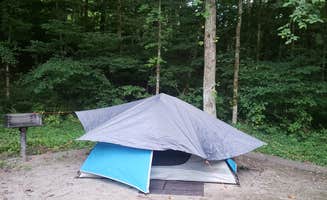
Tent-friendly grounds: Many sites have level, prepared tent pads. At Army Camp, "The ground is great for tents, no rocks" and "Sites are gravel with fire pit, charcoal grill, and picnic table."
Insect protection: Prepare for various insects depending on season. One visitor to Army Camp noted "Good amount of spiders and ants but didn't notice any mosquitoes in mid May."
Food storage: Secure all food items due to wildlife presence. Bring sufficient supplies as most sites are remote with one visitor mentioning to "remember you have to make that trip all the way back out if you forget anything at the store (like we did) so be prepared to have plenty of food and wood."
Water safety: Supervise children around water features closely. The New River has "currents are fast, powerful and dangerous" according to experienced campers.
Tips from RVers
Size restrictions: Most free camping areas have tight access roads limiting RV size. At Army Camp, visitors report it's "a one lane road to get to the campground and can get tight when other vehicles pass, but we got down there with our F250 truck and camper when a big grater and the park ranger came by. It's very doable."
Self-contained required: No hookups available at any location. "No electric/water, so plan to be ready to be off grid."
Level sites: Despite primitive conditions, some sites offer relatively level parking. Army Camp features "largely level gravel parking and tent pads" which can accommodate smaller trailers and truck campers.
Road conditions: Carefully assess access roads before attempting with larger vehicles. "The road getting back to the site is a little sketch but worth the trip in" according to one camper who successfully navigated to Army Camp.





 Traveler


