Equestrian camping opportunities near West Kingston, Rhode Island provide direct access to extensive trail networks in state forests and management areas. The region offers designated horse camping facilities with varying levels of amenities across Rhode Island and neighboring Connecticut. Summer temperatures average 70-85°F during peak camping season, with spring and fall offering cooler conditions ideal for trail riding.
What to do
Hiking trails access: Wolf Den Campground at Mashamoquet Brook State Park features multiple hiking trails suitable for day hikes when not riding. "Close to a small walking path and a larger intermediate hiking trail," notes camper 175 P., making it convenient for mixed-activity trips.
Stargazing opportunities: The rural location of many horse camps provides excellent night sky viewing. A camper at Wolf Den Campground appreciated the "large open areas for kids and adults to play during day and star gaze at night."
Fishing access: Frog Hollow Horse Camp provides additional recreation beyond riding. "There's also fishing and hiking available in the forest," according to Jean C., who visited the equestrian-focused campground.
What campers like
Multiple riding loops: Many equestrians appreciate the varied trail options. At Frog Hollow Horse Camp, "Three horseback riding loops leave from the campground," allowing riders to choose different routes based on time or difficulty.
Clean facilities: Campers consistently mention facility maintenance as important. At Mashamoquet Brook State Park, Gary G. noted the park was "completely cleaned up from any damage or debris, all in great shape" even after a hurricane.
Quiet environment: The peaceful setting enhances the camping experience. Gary G. described his stay as "totally silent. No road noise" with "most sites are relatively short level pads, with little or no shade, but very pleasant."
What you should know
Reservation requirements: Unlike LeGrand Reynolds which requires reservations, some horse camps operate differently. Frog Hollow Horse Camp is "first come, first serve" according to Jean C., requiring campers to arrive early during busy periods.
Limited information: Research before visiting is essential. Jean C. noted, "It's hard to find much information about this equestrian campground in Connecticut's Pachaug State Forest," suggesting contacting park offices directly for current conditions.
Site selection considerations: At Wolf Den, Jean C. advises that "The ones toward the back of the loop back up toward the woods and give you some more privacy," helping campers choose optimal locations for horse trailers and equipment.
Tips for camping with families
Playground access: Some campgrounds offer dedicated play areas for children. A reviewer at Wolf Den Campground noted there's "a small playground in the middle of the loop," providing entertainment for younger campers.
Special restrictions: Check campground policies before arrival. Jean C. mentions that at Wolf Den, "They don't allow hammocks in the trees or pets. For some reason, silly string also makes the list of prohibitions."
Educational opportunities: Historical features add educational value to family trips. Wolf Den includes "a small brook with an old mill and blacksmith shop that is sometimes open on weekends for tours," offering history lessons alongside outdoor recreation.
Tips from RVers
Site length limitations: Many horse campgrounds have constraints on vehicle size. At Wolf Den Campground, sites are described as having "relatively short level pads," potentially limiting larger rigs.
Electric availability: Power access varies significantly. Jean C. points out that at Wolf Den, "Site 20 is the only one with electric," making this site particularly desirable for those requiring power.
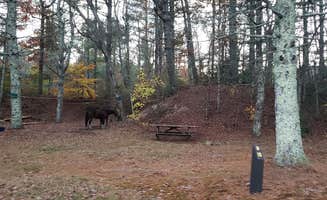
Space configuration: Horse campgrounds typically provide specialized layouts. At Frog Hollow, Jean C. mentions, "There's space for your camping gear as well as a trailer and horseline," showing the purpose-built nature of equestrian sites.




 Legend


