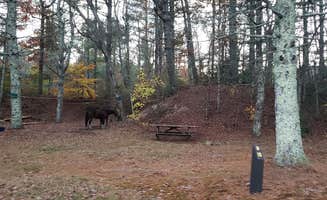
Equestrian camping near Hope Valley, Rhode Island offers access to extensive woodland trail systems through densely forested terrain. The region features a mixed oak-pine forest ecosystem with elevations ranging from 200-400 feet above sea level. Trail conditions vary seasonally, with spring bringing muddy sections and autumn offering drier, leaf-covered paths that require careful navigation with horses.
What to do
Trail riding loops: Multiple dedicated riding trails connect directly to equestrian camping areas. At Frog Hollow Horse Camp at Pachaug State Forest, riders can access three different horseback riding loops that depart right from the campground. "Three horseback riding loops leave from the campground. There's also fishing and hiking available in the forest," notes camper Jean C.
Swimming access: During summer months, several nearby water features provide options for cooling off after trail rides. Many riders bring collapsible buckets for horses to drink from natural water sources. At Wolf Den Campground, campers can utilize "a swimming pond, and a small brook with an old mill and blacksmith shop that is sometimes open on weekends for tours."
Family activities: Beyond riding trails, the area offers activities for non-riders. "It's a nice place to explore and have a picnic," explains a Wolf Den visitor. The campground features "a small playground in the middle of the loop, a number of hiking trails throughout the park along with a few geocaches."
What campers like
Spacious trailer parking: Equestrian campers appreciate sites designed with horse trailers in mind. At many locations, campsites include room for trucks, trailers and temporary corrals. Sites often have "large open areas for kids and adults to play during day and star gaze at night," according to a visitor at Wolf Den Campground.
Water accessibility: Horse owners value camping areas with reliable water sources for their animals. Frog Hollow campsites feature water access points, though availability may change seasonally. "Water is available. There's space for your camping gear as well as a trailer and horseline," notes a Frog Hollow visitor.
Privacy between sites: Many equestrian campers prefer sites with natural separation. At Wolf Den, "the parking pads are paved and a few have overhanging branches, but the trees provide separation and some shade on largely open sites that tend to open up toward the back with open areas for pitching tents."
What you should know
Reservation requirements: Some equestrian campgrounds operate on a first-come basis while others require advance booking. Frog Hollow Horse Camp operates on a "first come, first serve" system, which means arrival timing matters during peak seasons. "About half the sites were occupied in late October," notes one visitor, indicating lower occupancy during shoulder seasons.
Seasonal conditions: Trail access varies throughout the year, with some areas closed during hunting seasons or extreme weather. Shower facilities typically operate from Memorial Day through early fall at developed campgrounds. "The park was completely cleaned up from any damage or debris, all in great shape," reported a Normandy Farms camper after a hurricane.
Hookup variations: Campgrounds offer different utility configurations for equestrian campers. While some provide only basic amenities, others feature more comprehensive services. Regulations about generators and electricity vary by location, with most horse camps prioritizing basic needs over luxury amenities.
Tips for camping with families
Wildlife viewing opportunities: Children often enjoy the abundant wildlife visible from camp and trails. "The forest setting provides opportunities to spot deer, wild turkeys and various bird species during morning rides," reports a regular visitor. Bring binoculars and wildlife identification guides to enhance the experience.
Playground access: Some campgrounds include recreational facilities for children. Wolf Den Campground features "a small playground in the middle of the loop" that provides entertainment for children between trail rides. The site also offers "Large open areas for kids and adults to play during day and star gaze at night."
Clear campground rules: Different equestrian camping facilities maintain specific regulations regarding pets, fires and quiet hours. At Wolf Den Campground, "They don't allow hammocks in the trees or pets. For some reason, silly string also makes the list of prohibitions."
Tips from RVers
Site selection for trailers: When choosing sites, consider overhead clearance and turning radius needed for larger horse trailers. "The ones toward the back of the loop back up toward the woods and give you some more privacy," advises a camper about Wolf Den Campground. Most sites have "fire rings with grills and picnic tables."
Utility access points: RVers with living quarters trailers should verify hookup locations before arrival. While some campgrounds offer only minimal services, others provide more complete amenities. "Site 20 is the only one with electric" at Wolf Den Campground, making it the preferred choice for those needing power.
Length restrictions: Many equestrian camping areas have limited space for longer combined rigs. "Most sites are relatively short level pads, with little or no shade, but very pleasant. We picked site 33 for the best shade and longer pad," recommends a visitor to Wolf Den Campground who needed additional space.




 Legend


