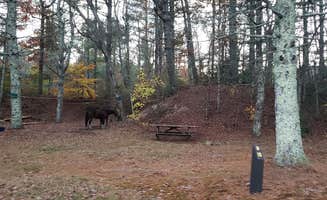
LeGrand Reynolds Horsemen's Camping Area offers primitive equestrian camping within Arcadia Management Area's 14,000-acre forest. The campground features basic amenities including electrical hookups and water access specifically for horse care needs. Site arrangements accommodate both camping equipment and horse trailers with adequate space for setting up horse lines and securing animals safely during overnight stays.
What to do
Trail riding access: Arcadia Management Area contains over 40 miles of multi-use trails suitable for horseback riding beyond the bridle paths mentioned in existing materials. The trails vary in difficulty from beginner-friendly flat terrain to more challenging routes with moderate elevation changes.
Fishing opportunities: The Arcadia Management Area includes multiple fishing spots within riding distance of the equestrian campground. According to Jean C., who visited Frog Hollow Horse Camp at Pachaug State Forest: "There's also fishing and hiking available in the forest," making it a popular activity for campers who bring fishing gear alongside their equestrian equipment.
Hiking exploration: When not riding, campers can explore numerous hiking trails throughout the area on foot. At Wolf Den Campground, a reviewer noted, "Close to a small walking path and a larger intermediate hiking trail," showing how these properties typically offer varied trail options for different skill levels and interests.
What campers like
Natural quiet: Many equestrian campers appreciate the peaceful environment away from urban noise. A visitor at Wolf Den Campground shared that when they arrived, it was "totally silent. No road noise," providing the kind of tranquil atmosphere that attracts people to this region's horse camps.
Spacious sites: Horse-friendly campsites typically offer extra space to accommodate trailers and horses. One camper at Ponkapoag Camp noted, "My children found trees close by to hang their hammocks," showing how the generous site layouts allow for comfortable setup of both essential equipment and leisure items.
Star viewing: The limited light pollution around equestrian camps creates excellent night sky viewing. A reviewer mentioned that Mashamoquet Brook State Park has "large open areas for kids and adults to play during day and star gaze at night," a benefit that extends to most equestrian camping areas in the region.
What you should know
Seasonal considerations: Horse camps in the area have different operating schedules. Wolf Den Campground operates from "May 26 to September 4," while other nearby equestrian facilities may have extended seasons, requiring advance planning for off-season visits.
Reservation requirements: Many equestrian campgrounds fill quickly during peak season. Rita M. from Ponkapoag Camp explained their reservation process: "Reservations are by mail only, although you can call the caretaker to confirm availability," highlighting the sometimes old-fashioned booking systems at these specialized campgrounds.
Limited amenities: Most equestrian campgrounds offer basic facilities. As one camper at Ponkapoag noted, "THERE IS NO ELECTRICITY OR RUNNING WATER," adding "We brought all our water from home, and it worked well." This reflects the primitive nature of many horse camps in the region.
Tips for camping with families
Plan for weather variations: New England weather can change rapidly. A visitor at Normandy Farms Campground recommended: "The cabins have wood stoves, which is great for the cooler parts of the year. We were there Memorial Day weekend, and needed the stove when it dipped to 40 degrees."
Bring entertainment options: While horses provide the main activity, having alternatives for children is important. One Ponkapoag camper shared, "The kids can hang out in the clubhouse if it's raining or swim in the pond if it's hot," suggesting the value of weather-appropriate backup activities.
Pack extra water: With limited facilities at most equestrian sites, water planning is essential. A camper advised, "Make sure you bring campsuds or other eco-friendly soap since the toilets are just outhouses without running water much of the year," highlighting the practical considerations for family comfort.
Tips from RVers
Size restrictions: Most horse camping areas near Greene have limited space for larger rigs. At The Preserve Club and Residences, facilities accommodate RVs but aren't marked as big-rig friendly, requiring careful planning for those with larger setups.
Electric options: While many horse camps offer basic hookups, amperage varies. LeGrand Reynolds offers both fifty-amp and thirty-amp electric hookups, allowing flexibility for different RV power needs while still accommodating horse trailers.
Distance planning: RVers should note that some equestrian camping areas require significant travel from main roads. Gary G. from Wolf Den Campground observed there was "No road noise," indicating the campground's distance from major thoroughfares, which can make access more challenging for larger rigs.




 Legend


