



Debbie T. Traveler
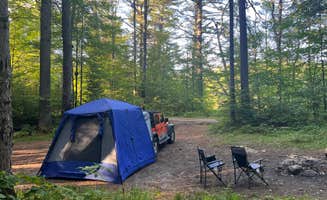
TravelerPolliwog Lake on Floodwood Road
Very relaxing
Camped here for a few days, no cell, no internet
5 campgrounds · Check availability for any dates.
Dispersed camping options near Hogansburg, New York are concentrated in the Adirondack region approximately 70 miles south, offering free primitive campsites with no fees or reservations required. Little Green Pond offers 12 designated primitive sites situated around the water, with some requiring navigation down bumpy access roads that become problematic after rainfall. The sites are shaded by pine trees and include a small beach area for swimming. Fire rings are available, but the area lacks drinking water, toilets, trash service, and other amenities.
Polliwog Lake on Floodwood Road provides tent and RV-suitable dispersed camping with drive-in and walk-in access. According to one visitor, the area offers "very relaxing" conditions with "no cell, no internet." Additional primitive camping can be found at Mountain Pond Road and Jones Pond, though these less-developed areas have limited documented visitor experiences. All dispersed sites in the region require self-sufficiency as they provide no drinking water, waste facilities, or hookups of any kind.
"Only if humans would practice leave no trace. Take all items you brought with you, out with you."
"Some require driving down a bumpy access road that can be muddy after a rain. Sites are on the Pond. Pond has a small beach to swim. Tree covered sites."
TravelerCamped here for a few days, no cell, no internet
Dispersed camping near Hogansburg, New York requires travelers to venture approximately 70 miles south to the Adirondack region, where sites are generally primitive with minimal amenities. The camping areas sit within the Adirondack Forest Preserve at elevations ranging from 1,500-1,700 feet, creating cooler nighttime temperatures even in summer months. Winter access becomes difficult with seasonal road closures typically from November through April.
Fishing opportunities: Little Green Pond offers decent fishing conditions for brook trout during spring and fall seasons. According to Lo M., the pond provides "peaceful spots under the pines" where anglers can cast directly from shorelines near camping areas.
Paddling excursions: Bring kayaks or canoes to explore the interconnected waterways. Mountain Pond Road provides several water access points with relatively calm conditions suitable for beginners and intermediate paddlers.
Wildlife observation: Dawn and dusk offer prime wildlife viewing opportunities. Jones Pond features several clearings where deer and small mammals frequently appear. Early morning hours provide the best chances for spotting local wildlife.
Natural isolation: The remote setting appeals to those seeking quiet camping experiences. Debbie T. notes that at Polliwog Lake on Floodwood Road, campers enjoy "camped here for a few days, no cell, no internet," making it ideal for digital detox.
Accessibility of water: Most primitive camping near Hogansburg positions campers within 50-100 feet of water. Little Green Pond sites sit close to shorelines, allowing for direct water access from most camping spots.
Pine forest surroundings: The region's characteristic pine forests provide natural shade and wind protection at most sites. The pine needle ground cover at many locations creates comfortable tent padding and reduces mud issues during light rain.
Water purification requirements: No potable water exists at any dispersed sites. Campers must filter, treat, or boil all water from ponds and lakes, which contain natural tannins giving water a brownish tint.
Access road conditions: Several sites require navigating unpaved forest roads. Mountain Pond Road becomes particularly challenging after rainfall, with several low spots prone to standing water. High-clearance vehicles are recommended during wet periods.
Temperature fluctuations: The Adirondack region experiences significant day-to-night temperature drops, often 20-30 degrees Fahrenheit. Camping in spring or fall requires adequate cold-weather gear as overnight temperatures can approach freezing even when daytime temperatures reach 70°F.
Site selection priorities: Choose sites closest to designated swimming areas when camping with children. Little Green Pond provides shallow entry points where younger swimmers can wade safely while remaining visible to adults.
Animal-proof food storage: The Adirondack region requires proper food storage to prevent wildlife encounters. Jones Pond campsites benefit from several trees suitable for hanging food bags at least 12 feet high and 6 feet from trunks.
Backup activities: Weather changes rapidly in the mountains. Pack cards, games, and books for children during rain periods. Most sites offer limited natural shelter, making tent-based activities necessary during precipitation.
Length restrictions: Most forest roads leading to primitive camping near Hogansburg accommodate smaller RVs under 25 feet. Longer rigs face turning challenges, particularly at Little Green Pond where access roads narrow considerably near camping areas.
Leveling requirements: Dispersed sites rarely offer naturally level parking. Bring adequate leveling blocks as most locations feature slight to moderate slopes. RVs should carry at least 6-8 inches of leveling capacity for typical site conditions.
Generator considerations: Check seasonal fire danger levels before operating generators at dispersed sites. During dry periods, the Department of Environmental Conservation may restrict generator use due to fire hazards. Polliwog Lake sites typically offer more open areas with reduced fire risk compared to heavily wooded alternatives.
Frequently Asked Questions
Which is the most popular dispersed campsite near Hogansburg, NY?
According to TheDyrt.com, the most popular dispersed campground near Hogansburg, NY is Mountain Pond Road with a 5-star rating from 1 review.
What is the best site to find dispersed camping near Hogansburg, NY?
TheDyrt.com has all 5 dispersed camping locations near Hogansburg, NY, with real photos and reviews from campers.
Keep Exploring