Colville National Forest spans 1.1 million acres across northeastern Washington, with elevations ranging from 1,600 to over 7,300 feet. Most primitive camping near Colville National Forest occurs along forest service roads and undeveloped areas with limited facilities. Summer temperatures typically reach 75-85°F during daytime hours, while nighttime temperatures can drop to 40°F even in July and August, requiring appropriate cold-weather gear.
What to do
Fishing at stocked lakes: Little Pend Orielle Campground provides access to Potters Pond, which is stocked with rainbow trout. "There is a family friendly fishing dock on Potters pond, and it is stocked with good sized rainbow trout the little kids had a blast fishing," reports Little Pend Orielle Campground visitor Karly L.
Creek exploration: Many dispersed sites offer creek access for wading and exploration. "The godson loved it - he even played in the freezing cold water," notes Naomi C. about her stay at North Fork Chewelah Creek.
Kayaking: Several small lakes in the area provide calm waters for paddling. "Both the lake and the pond would be amazing places to kayak, we would have if the weather had been a bit nicer," shares one camper at Little Pend Orielle.
Wildlife viewing: The forest hosts diverse wildlife including deer, bears, and numerous bird species. "Birds everywhere, woodpeckers in the birch trees and killdeer darting down to the water. Chipmunks and rabbits. Tadpoles and turtles and little water snakes," describes Allyson A. about her experience at Cooks Lake.
What campers like
Water sounds: Many campsites are positioned near flowing water, providing natural white noise. One North Fork Chewelah Creek camper notes, "Small space with multiple dispersed camp sites along the creek and throughout the wooded area. The creek is very small but powerful."
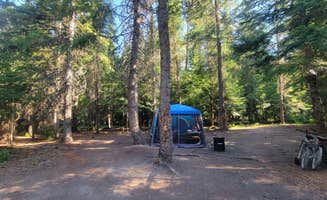
Site spacing: Dispersed areas typically offer good separation between campsites. "The spots we saw were all quite large and they are very spread out from each other," writes a visitor to Little Pend Orielle Campground.
Swimming opportunities: Several sites feature swimming areas for cooling off during summer months. "There is a small lagoon for swimming," reports Ryan C. about Campbell Park at Box Canyon Dam.
Night skies: The remote location provides exceptional stargazing opportunities with minimal light pollution. "Bats at night, and the stars!!" exclaims an enthusiastic Cooks Lake camper.
What you should know
Road conditions: Many camping areas require navigating rough forest roads. "The road to get there was approximately six miles of gravel winding single lane road," explains Jennifer R. about accessing Cooks Lake.
Bear safety: Bears are common throughout the region. "Keep in mind lots of bear sign and cougars," warns Paige P. about PauPac Road Camp.
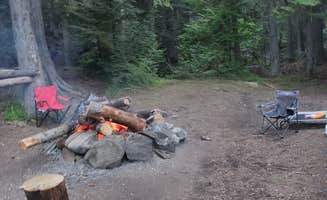
Limited facilities: Most dispersed sites lack amenities. "If you like camping completely self contained, this is for you. There is a pit toilet (locked due to current COVID restrictions), and a fire ring at each dispersed campsite. No water, except for the creek, and not even any cell phone reception," explains Gary M. about Little Pend Orielle.
Seasonal considerations: Weather conditions change rapidly. "During our stay it got very cold and we needed to use our heater," notes Marcus K. about his Memorial Day weekend at Sullivan creek.
Tips for camping with families
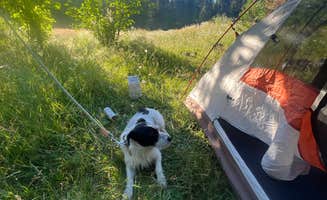
Water safety: Creek water moves quickly in spring and early summer. "During our stay the river was cold and very fast and if your dog is not trained using a leash or tether system for safety would be beneficial," advises a Sullivan creek campground visitor.
Wildlife education: The area provides excellent opportunities for nature lessons. "We had a lovely view of the pond, which did make the mosquitos quite a nuisance but manageable," reports one Little Pend Orielle camper.
Extra clothing: Pack additional warm layers regardless of season. "This time of year the river was cold and very fast... make sure to bring the weather appropriate clothing," recommends Marcus K.
Navigation preparation: Cell service is extremely limited. "A CAUTION is to bring a GPS and have good map reading skills to avoid getting lost; it's easy to lose yourself," warns Gary M.
Tips from RVers
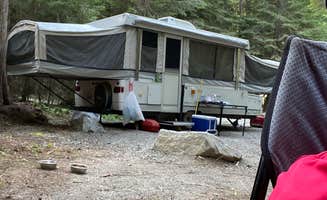
Site selection: Many dispersed areas have limited level spaces for larger vehicles. "At least 2 of them are good for my trailer although I wouldn't try if you're not experienced with towing," advises Jennifer R. about Cooks Lake.
Ground conditions: Be aware of seasonal soil conditions when parking. "Decided to drive down to the water (that was hardly there) and found myself barely on the edge of lake bottom mud. Didn't get out till the next morning," shares Nate about his experience at Cooks Lake.
Limited turnaround space: Forest roads often lack wide spots for turning larger vehicles. "Roads into the area are narrow gravel roads, so 'large' rigs and/or trailers may find it a challenge," notes Gary M. about Little Pend Orielle.
Alternative camping locations: When designated sites are full, nearby dispersed areas may be available. "There are a TON of dispersed camping areas within a mile of this 'campground' so if its full, it's not a big deal," explains Jeffrey R. about Cee Cee Ah Creek.


 Guide
Guide


